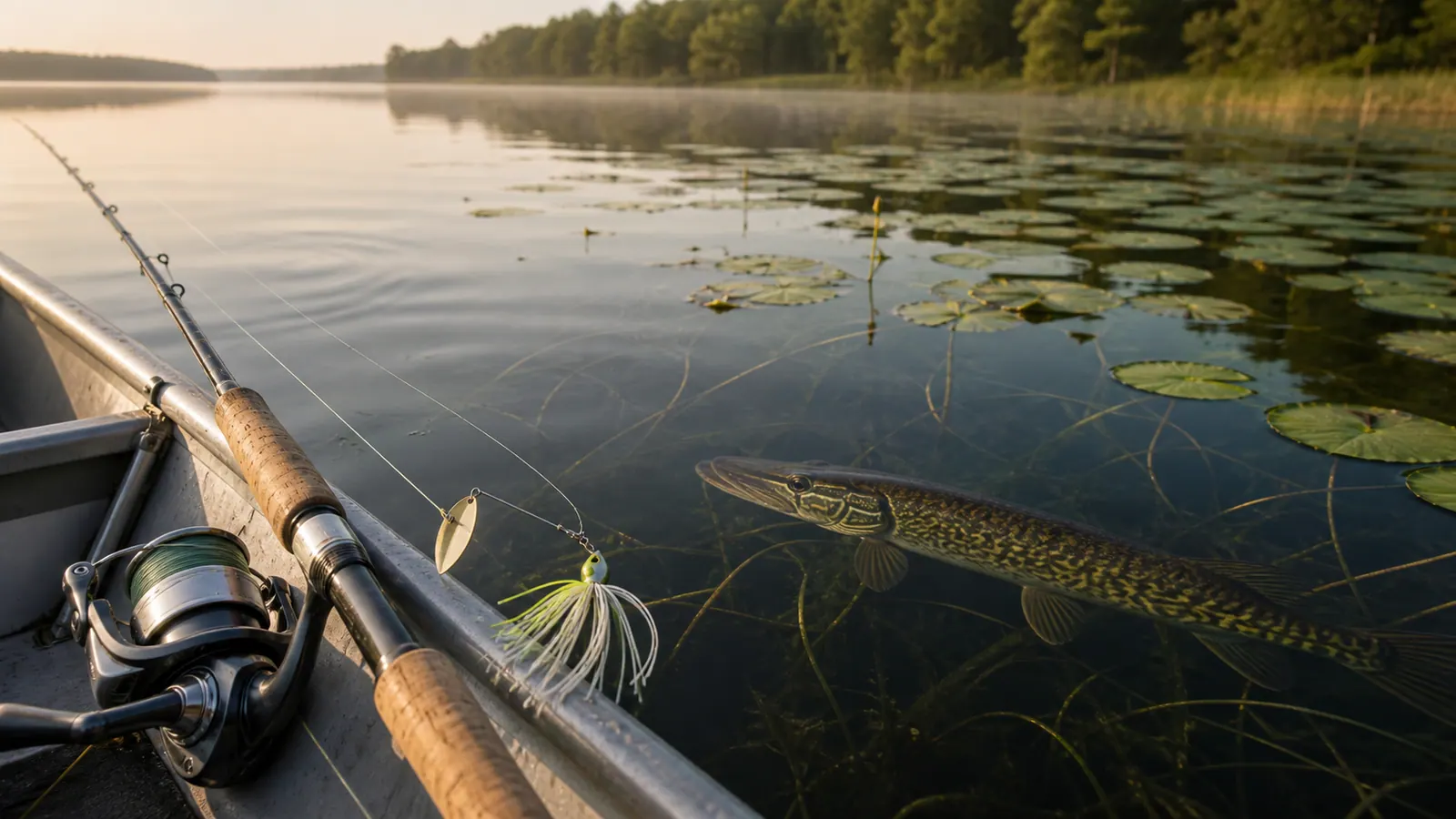
The best all-around chain pickerel fishing setup is a 6-foot-6-inch to 7-foot medium-power, fast-action spinning rod paired with a 2500-size reel. Spool it with 10- to 15-pound braided line and finish with a short 20- to 30-pound flexible wire leader. Start with a 3/8-ounce spinnerbait, a weedless spoon or a 3- to 4-inch soft jerkbait.
That combination is light enough to make an average pickerel fun, but it still has the control needed to pull a fish away from grass, lily pads and submerged wood. It also covers most ponds, lakes and slow rivers without requiring specialized tackle.
The setup at a glance
| Component | All-around choice | Why it works |
|---|---|---|
| Rod | 6'6"–7' medium power, fast action | Accurate casts, solid hooksets and enough backbone for weeds |
| Reel | 2500-size spinning reel | Balances the rod and holds plenty of 10–15 lb braid |
| Main line | 10–15 lb braid | Thin diameter, long casts and good contact with the lure |
| Leader | 6–10 in of 20–30 lb flexible wire | The most dependable protection against bite-offs |
| Starter lure | 1/4–3/8 oz spinnerbait | Flash, vibration and reasonable weed resistance |
| Tools | Long-nose pliers and a small rubberized net | Keeps hands away from teeth and shortens release time |
If you expect only small pickerel in open water, a medium-light rod is enjoyable. If the lake is choked with vegetation or holds northern pike as well, step up to a medium-heavy rod and stronger leader. Not sure which fish you caught? Use our chain pickerel vs northern pike identification guide.
Why this tackle matches chain pickerel behavior
Chain pickerel are ambush predators. They commonly hold beside vegetation, brush and other cover, then accelerate over a short distance to strike. New Jersey Fish & Wildlife notes that pickerel favor vegetative and woody cover, while the North Carolina Wildlife Resources Commission recommends fishing around aquatic vegetation, lily pads and brush piles.
That behavior creates three practical tackle requirements:
- The rod must cast accurately along a weed edge rather than only cast far.
- The line must transmit a quick strike and help turn the fish away from cover.
- The final connection must tolerate contact with sharp teeth.
Pickerel are found in heavily vegetated, slow-moving waters, according to the South Carolina Department of Natural Resources. Build the setup around the cover—not around the maximum size of the fish.
Choosing the rod
Best all-around rod: medium power, fast action
A medium-power, fast-action spinning rod is the easiest starting point. The responsive tip casts lighter lures and helps work jerkbaits, while the stronger lower section controls fish around weeds. A length between 6 feet 6 inches and 7 feet is manageable from a kayak, small boat or bank.
Choose the shorter end of that range when accuracy matters around tight cover. Choose the longer end when you need extra casting distance across open flats or broad weed lines.
When to use medium-light or medium-heavy
- Medium-light: small inline spinners, light jigs and open water with limited cover.
- Medium: the best general-purpose choice for spinnerbaits, spoons, jerkbaits and soft plastics.
- Medium-heavy: heavy vegetation, larger single-hook lures or water shared with northern pike.
Avoid an ultralight rod when thick weeds and hard-mouthed fish are involved. It may cast small lures well, but it gives you less control at the moment you need to keep a hooked fish out of cover.
Reel size and drag
A 2500-size spinning reel balances most medium rods and offers a useful mix of line capacity, retrieve speed and weight. A 2000-size reel is fine for a light, open-water setup, while a 3000-size reel can help with heavier line and larger lures.
Set the drag firmly enough to drive a single hook, but do not lock it down. Test it by pulling line from the finished rig: the spool should release line under a strong, steady pull. Pickerel often surge or shake near the boat, so a functioning drag protects both the line and the hook hold.
Main line: braid, mono or fluorocarbon?
10–15 lb braid is the most versatile
Braid is thin, sensitive and has little stretch. It casts well and helps cut through light vegetation. The tradeoff is that it is visible in clear water and offers almost no protection from teeth, so it should end in a bite-resistant leader.
8–12 lb monofilament is beginner-friendly
Monofilament is inexpensive, easy to knot and forgiving during a close-range surge. It works well with topwater lures because it generally floats. It has more stretch and less sensitivity than braid, and it still needs a leader when pickerel are the target.
Fluorocarbon main line is optional
Fluorocarbon sinks and can be useful with subsurface lures in clear water, but it is stiffer than braid and mono at the same strength. Many anglers get a simpler, more versatile system by using braid or mono as the main line and changing only the short leader.
If line twist is already a problem on your reel, see how to put line on a spinning reel without twist before building the rig.
Leader choice: wire vs heavy fluorocarbon
A short, flexible wire leader is the safest recommendation when you are intentionally targeting chain pickerel. Six to 10 inches of 20- to 30-pound wire is enough for typical lures and keeps the connection compact. Use a small snap only when you expect to change lures frequently; otherwise, tie directly when the lure and leader allow it.
Heavy fluorocarbon can preserve lure action and may be less visible in clear water, but it is abrasion-resistant, not tooth-proof. If you choose fluorocarbon, use roughly 30- to 40-pound material, inspect it after every fish and replace it immediately if it feels rough or nicked. Use wire when preventing bite-offs is the priority.
Best lures for this setup
| Condition | First lure to try | Presentation |
|---|---|---|
| Sparse grass or open pockets | Spinnerbait | Steady retrieve just above the vegetation |
| Thick weeds and lily pads | Weedless spoon | Slow wobble with brief pauses in open pockets |
| Cool, clear water | Suspending jerkbait | Twitch, pause and lengthen the pause after a follow |
| Shallow warm water | Soft jerkbait or topwater | Erratic retrieve beside cover |
| Cold water or inactive fish | Live minnow where legal | Suspend near a weed edge under a float |
Spinnerbaits and inline spinners
Flash and vibration make these excellent search lures. A compact 1/4- to 3/8-ounce spinnerbait comes through scattered grass better than a treble-hook lure. Inline spinners are effective in cleaner water, but they collect vegetation more easily.
Weedless spoons
A weedless spoon is a strong choice for pads, reeds and matted vegetation. Retrieve it only fast enough to keep it wobbling above the cover. Add a small grub trailer if you want more action, but expect soft plastic to show tooth damage.
Jerkbaits and soft jerkbaits
Hard jerkbaits excel along outside weed edges, especially in cool water. A twitch-pause retrieve gives a following fish time to commit. In thick vegetation, rig a soft jerkbait weedless and work it through gaps. The article how to fish weeds without getting snagged covers the broader approach.
Live bait
New Jersey and North Carolina wildlife agencies both list minnows or shiners among effective pickerel baits. Suspend a lively minnow beside cover under a float and use a leader that protects against teeth. Check current local rules first: permitted bait species, hook types and possession requirements vary by location.
How to rig the setup
- Spool the reel with 10- to 15-pound braid, leaving a small gap below the spool lip.
- Connect the braid to a 6- to 10-inch flexible wire leader using the leader manufacturer's recommended knot or connection.
- Tie the lure directly or use the smallest strong snap that suits the lure.
- Check the drag with the rod assembled and the line running through every guide.
- Pack long-nose pliers before the first cast.
Keep the leader short enough that it does not have to pass repeatedly through the rod guides. This makes accurate casting easier and reduces wear on both the guides and connection.
Adjust the setup by season
Spring
Fish shallow coves, new weed growth and protected shorelines. Spinnerbaits, small spinners and shallow jerkbaits let you cover water. Chain pickerel favor cool conditions and are a strong early-spring target, according to New Jersey Fish & Wildlife.
Summer
Work early and late around shallow cover, then check deeper outside weed edges when the sun is high. Use weedless soft plastics in thick cover and deeper-running lures along the edge. Topwater can produce dramatic strikes in open lanes above vegetation.
Fall
Cover water with spinnerbaits, spoons and jerkbaits as temperatures fall. Pay attention to green vegetation and nearby baitfish. Keep a follow-up lure ready: a pickerel that follows without striking may respond to a smaller bait or a longer pause.
Winter
Pickerel remain active in cold water and are also caught through the ice. Slow the presentation and spend more time near remaining vegetation or deeper forage. Ice-fishing rules and safe-ice conditions are local matters, so verify both before going out.
Where to cast first
- Inside and outside weed edges
- Open pockets in lily pads
- Laydowns, stumps and brush beside calm water
- Points where two types of vegetation meet
- Small creek mouths and quiet backwaters
Cast parallel to an edge when possible. The lure stays in the strike zone longer than it does on a cast straight across the cover. If you see a wake or a fish following, keep the lure moving until it reaches the boat; pickerel often strike late.
Landing and releasing chain pickerel safely
Do not put your fingers inside a pickerel's mouth. Use a rubberized net when practical, keep the fish low over the water and remove the hook with long-nose pliers. Support the body with a wet hand if you lift the fish for a quick photo. Cut a difficult hook rather than extending handling time.
Treble hooks can complicate release. Consider replacing them with suitable single hooks or crimping the barbs on lures dedicated to pickerel, provided local regulations allow it.
Five common setup mistakes
- Skipping the leader: ordinary main line can be damaged or cut by teeth.
- Using oversized pike tackle: it reduces casting ease and makes average pickerel less enjoyable.
- Throwing exposed trebles into dense weeds: choose a spinnerbait, weedless spoon or weedless soft plastic instead.
- Locking the drag: close-range surges can tear hooks free or break a damaged connection.
- Leaving the pliers behind: safe, fast unhooking should be part of the setup.
Frequently asked questions
What pound line should I use for chain pickerel?
Use 10- to 15-pound braid for an all-around spinning setup or 8- to 12-pound monofilament if you prefer more stretch. In either case, add a short bite-resistant leader.
Do you need a steel leader for chain pickerel?
A flexible wire leader is the most reliable way to prevent bite-offs. Heavy fluorocarbon is a less visible alternative, but it is not completely tooth-proof and must be inspected frequently.
What size hook works for chain pickerel?
The hook should match the bait rather than the maximum size of the fish. For a typical live minnow, a strong size 1 to 1/0 single hook is a practical starting range, subject to local rules and the actual bait size.
Can I use a bass rod for pickerel?
Yes. A medium-power bass spinning rod or casting rod works well. Add a bite-resistant leader and choose lures that match the vegetation.
What is the best lure for chain pickerel?
A compact spinnerbait is the best all-around starting lure because it combines flash, vibration and some weed resistance. Use a weedless spoon or soft jerkbait when the vegetation becomes too dense.
Final checklist
- 6'6"–7' medium, fast-action spinning rod
- 2500-size reel with a working drag
- 10–15 lb braid or 8–12 lb monofilament
- 6–10 in bite-resistant leader
- Spinnerbait, weedless spoon and soft jerkbait
- Long-nose pliers and rubberized net
- Current fishing license and local regulations
Begin with the all-around setup, then change only one element at a time as cover, water clarity and lure weight demand it. That keeps the system simple and makes it easier to learn what the fish are responding to.