Halibut are the fish people picture when they think of Alaska saltwater fishing: flat, brown on top, white underneath, and sometimes bigger than the person reeling them up. Most of the halibut fishing I do is on charters out of Homer, at the end of the Kenai Peninsula, and this guide is what I'd tell a friend booking their first trip: when to go, what the 2026 rules mean on the boat, what it really costs, what the day looks like, and how to get your fish home.
| Question | Short answer |
|---|---|
| Where to go | Homer: lots of boats, processors at the harbor |
| Best month | July, but weather and tides matter more than the month |
| Charter cost | Budget about $375–400 per person for a full day, plus extras |
| 2026 charter limit | 2 halibut a day: 1 any size, 1 no longer than 27 inches |
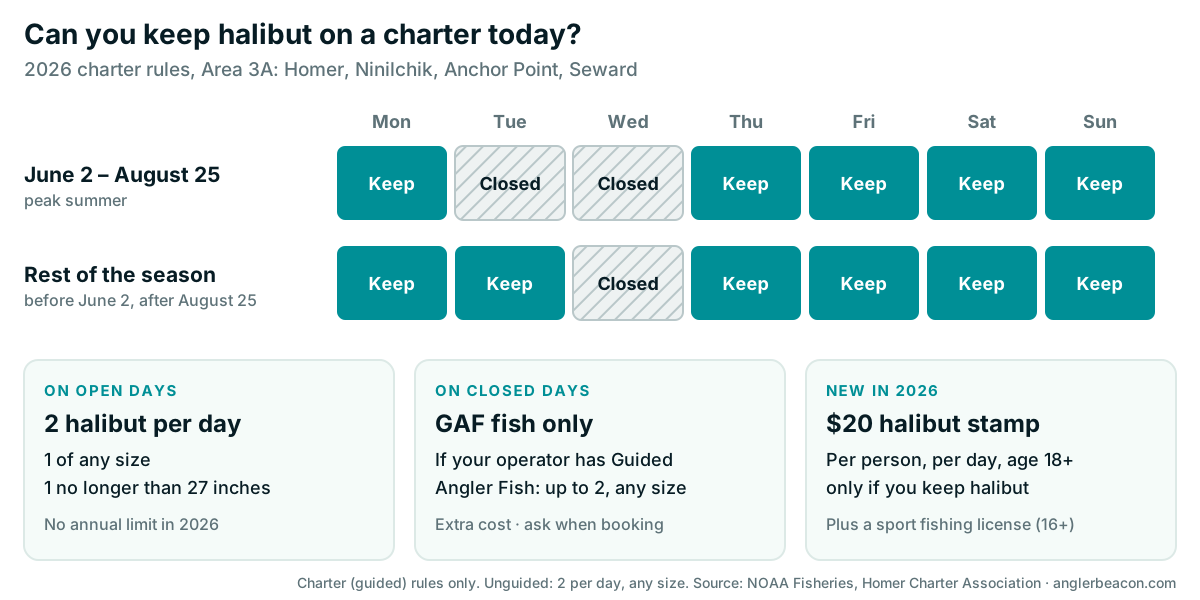
| Closed days (charter) | Every Wednesday, plus Tuesdays from June 2 to August 25 |
| New in 2026 | $20 charter halibut stamp per day for anglers 18+ who keep halibut |
Why Homer for halibut
Homer calls itself the halibut fishing capital of the world, and for a visitor it's the easiest place to fish for them. I mostly fish out of Homer because everything is in one place: you leave from the harbor, there's a big choice of boats, and the fish processors are close by when you get back. That makes the whole day easier to organize, especially if you want your fish frozen and shipped.
Other Kenai Peninsula ports
- Ninilchik (Deep Creek) and Anchor Point: north of Homer on Cook Inlet. Boats at Deep Creek launch from the beach with a tractor, which is an experience in itself. Several charters here offer halibut-and-salmon combo trips.
- Seward: on Resurrection Bay, on the east side of the peninsula, about two and a half hours from Anchorage by road. It falls under the same 2026 charter rules as Homer.
All of these ports are in the same halibut management area (Area 3A), so the rules below apply to every one of them.
When to go
The sport halibut season in Southcentral Alaska runs from February 1 to December 31, but most charters run from late spring through the end of summer. If I had to pick one month, I'd pick July. There's plenty of daylight, and it's a good time to combine halibut with other species.
That said, I pay more attention to the weather and the tides than to the month alone. A calm day on a small tide in June beats a windy day on a big tide in July. Before you lock in dates, look at a tide table for Homer and, if you can, plan your charter around the smaller tidal exchanges. The next sections explain why.
The 2026 charter rules, explained
Charter rules for halibut are set every year, and 2026 has a couple of new wrinkles. Here's how they work on the boat.
Two fish a day: one big, one small
On a charter in Area 3A you can keep two halibut per day: one of any size, and one no longer than 27 inches. There's no annual limit in 2026. In practice, the crew measures the smaller fish carefully and keeps track of each angler's catch, so you don't have to worry about it yourself. Just tell the deckhand before you put a fish in the box.
Closed days: Wednesdays, and Tuesdays in summer
Under the regular charter limit you can't keep halibut on any Wednesday, or on Tuesdays from June 2 through August 25. If my trip includes those days, I use them for another species or for a day ashore.
Some operators offer Guided Angler Fish (GAF). These are halibut leased from the commercial quota, and they let a charter angler keep up to two halibut of any size even on a closed day. GAF fish cost extra and not every operator has them, so ask before you book if your dates fall on a Tuesday or Wednesday.
The new $20 charter halibut stamp
New in 2026: anglers 18 and older who plan to keep halibut on a charter need a $20 charter halibut stamp for each day they fish. If you only catch and release, you don't need it. The guide will usually arrange the stamp with you, but ask when you book so it's not a surprise. You'll also need a regular Alaska sport fishing license; nonresidents need one from age 16.
Charter vs. fishing with a friend
These charter restrictions don't apply the same way when you fish unguided, for example from a friend's boat. Unguided anglers in Area 3A can keep two halibut a day of any size, with one line and no more than two hooks. A charter is any trip where you pay someone to take you fishing, so the charter rules follow the trip, not the boat.
Planning a trip around the closed days
The closed days are easy to work with once you plan for them. Say you're in Homer for a week in July:
- Book your halibut charter for a Thursday, Friday, Saturday, Sunday or Monday. Those are the open days in summer.
- Keep a spare open day as a weather backup. Charters cancel when it's too rough, so if your only halibut day blows out you lose the trip.
- Use Tuesday and Wednesday for something else: salmon on the Kenai or the Russian River, a combo trip that targets other species, or a day ashore.
- If Tuesday or Wednesday is your only option, look for an operator with GAF fish and expect to pay extra.
What a charter day looks like
Plan on an early start, around 6 or 6:30 a.m. The run out to the fishing grounds can take anywhere from one to three hours, depending on where the captain wants to fish that day. I allow the whole day: several hours of fishing and a late-afternoon return to the harbor.
Most of the time I go on charters. I like being able to concentrate on fishing while the captain handles the boat and finds the grounds. I'm happy to go with a friend too, when the chance comes up, but for a visitor a charter is the simple choice: the boat, the gear, the bait and the local knowledge come with it.
How halibut fishing works
Depth and weight
Out of Homer we usually fish somewhere around 100 to 200 feet deep, although it depends on the spot. In Cook Inlet I'm prepared to use one to three pounds of lead. The current makes a huge difference. Sometimes keeping the bait on the bottom is the hardest part of the day.
Why I plan around the tides
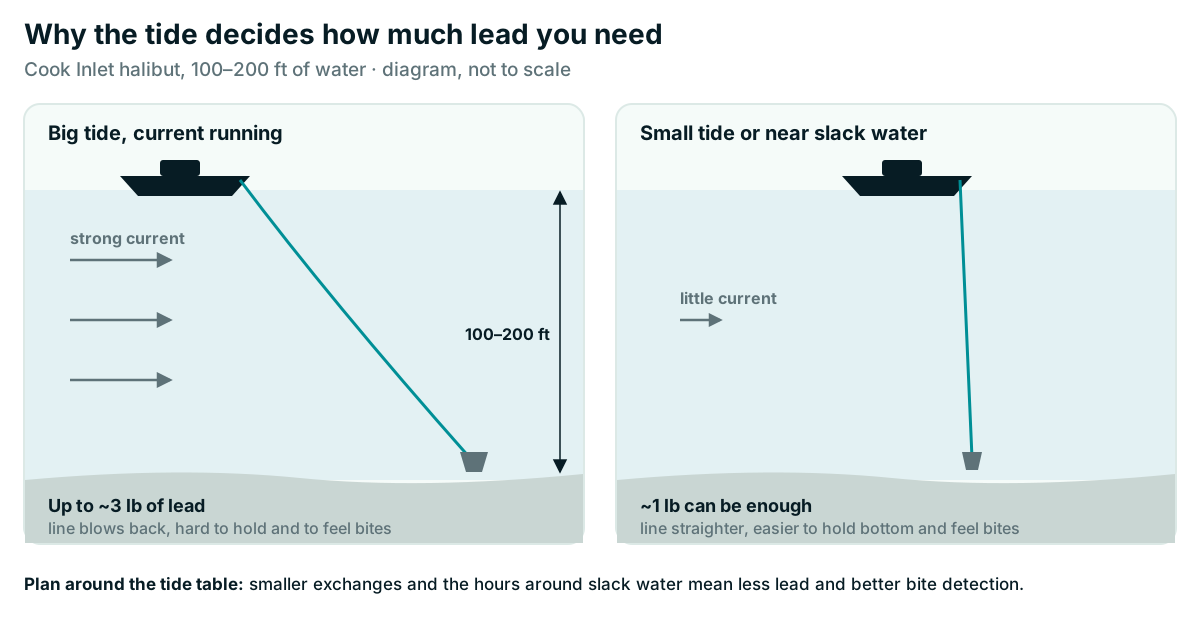
I definitely plan around the tides. I prefer smaller tidal exchanges and fishing around slack water. It's easier to hold bottom, you use less weight, and you can actually feel what's happening instead of fighting the current all day. On a big tide with the current running, the line blows back, you need more lead, and a light bite can go unnoticed.
Bait and lures
- Herring is my first choice.
- I like adding a tough piece of octopus, because it stays on the hook well, even after a few bites from small fish.
- Salmon bellies are another option I'd try.
- Jigging is fun when conditions allow, but bait is my usual starting point.
On a charter the crew rigs everything, so you don't need to bring your own tackle. Your job is to keep the bait near the bottom, pay attention to the rod tip, and reel steadily when a fish is on. Halibut often come up in surges, and the deckhand will handle the fish at the side of the boat.
Chickens and barn doors: what size to expect
You'll hear two words on the boat. Small halibut are called "chickens", and really big ones are "barn doors". Most of the fish you catch on a normal day are in between, and that's fine: smaller halibut are excellent eating, and the 27-inch slot in your charter limit is made for them. Big fish do get caught, but no honest captain can promise one, so book the trip for a good day on the water and take a big fish as a bonus.
What a halibut charter costs
For a standard full-day halibut trip out of Homer, I'd budget around $375–400 per person before extras. Before booking, I confirm that rods, tackle, bait and basic filleting are included. Then I budget separately for the rest:
| Item | Budget per person |
|---|---|
| Full-day halibut charter | About $375–400 |
| Charter halibut stamp (18+, if you keep halibut) | $20 per day |
| Nonresident sport fishing license | $15 for 1 day, $30 for 3 days, $45 for 7 days |
| Sales tax | Check with the operator |
| Tip for the crew | Budget for it; good deckhands earn it |
| Processing (vacuum-seal and freeze) | About $1.90–2.10 per pound of fillets |
| Shipping within the U.S. | Often about $200–300 per shipment; get a quote |
Combo trips that add salmon or other species cost more than a straight halibut day, and early-season trips are often cheaper than peak summer. Prices change every year, so treat these as planning numbers and confirm when you book.
Getting your fish home
The easiest way is a local processor. In Homer they'll portion, vacuum-seal, freeze and box your fish. For fish that's already filleted, current Homer prices are roughly $1.90–2.10 per pound for packing and freezing, depending on how fast you need it.
Shipping within the U.S. can add around $200–300, depending on the shipment and the service. I'd get an actual quote first and compare it with taking a frozen fish box as checked baggage on your flight. If you live outside the U.S., check your country's import rules for fish separately before you plan to bring any home.
Seasickness: prepare before you leave
Cook Inlet can be rough, and a long run on a choppy day will test anyone. My advice is to prepare before you leave the dock:
- Get a good night's sleep and skip the alcohol the night before.
- On the boat, look at the horizon instead of staring at your phone.
- Stay in the fresh air rather than inside the cabin.
- If you use medication, check with a pharmacist about what suits you, and take it before the trip, following the instructions.
Waiting until you're already sick makes things much harder.
What to wear and bring
Even on a nice summer morning, prepare for cold wind and spray. My list:
- Layers, with a warm fleece
- Waterproof outer layer (jacket and pants)
- Waterproof boots with good grip
- Warm hat and spare socks
- Sunglasses and sunscreen
- Lunch and water for a long day
- Your fishing license, and your halibut stamp if you have it already
Are combo trips worth it?
For me, yes, if I want variety. I like bringing home different fish and changing fishing styles during the day. If my main goal is to spend as much time as possible targeting halibut, I choose a dedicated halibut trip. For a combo trip, ask which species are realistically available that week, because "halibut and salmon" means something different in June than in August.
How to pick a good charter
Before booking, I ask:
- How many passengers will be on the boat?
- How much actual fishing time is there, compared with travel time?
- What's included: rods, tackle, bait, filleting? What costs extra?
- What's the weather cancellation policy?
- Do you offer GAF fish if my day falls on a closed day?
I want a captain who answers clearly and sets realistic expectations. These would put me off:
- "Guaranteed" trophy fish. Nobody can promise that.
- Unclear extra charges that only show up after the trip.
- Pressure to go out in poor conditions. A good captain cancels when it's unsafe.
Your first halibut charter: a checklist
- Pick dates outside the closed days, with one spare day for weather.
- Check a tide table for Homer and favor days with smaller tides.
- Book a charter after asking the questions above, and ask how the halibut stamp is handled.
- Buy your fishing license online from ADF&G before the trip.
- Choose a processor near the harbor and ask about prices, turnaround and shipping.
- The night before: sleep well, skip the alcohol, pack layers, rain gear and lunch, and take seasickness medication on time if you use it.
- On the day: be at the harbor early, bring cash or a card for the tip, and tell the deckhand before you keep a fish.
Cooking halibut at home
In my family we like halibut fairly simple: baked with butter, garlic, lemon and a little seasoning. Sometimes we make fish tacos or battered pieces. The main thing is not to overcook it. Halibut is lean, and it's easy to dry out a good piece. Take it out as soon as it flakes.
Questions people ask about Alaska halibut charters
How much does a halibut charter cost in Homer?
Budget about $375–400 per person for a standard full day in 2026, before the halibut stamp, license, tax, tip and processing. Combo trips cost more, and early-season trips are often cheaper.
Do I need a halibut stamp in 2026?
Yes, if you're 18 or older and want to keep halibut on a charter in Area 3A (Homer, Ninilchik, Anchor Point, Seward) or Southeast Alaska. It costs $20 per person per day. You don't need it for catch-and-release or for unguided fishing.
What days can you keep halibut on a charter in 2026?
In Area 3A, every day except Wednesdays all season, and except Tuesdays from June 2 to August 25. On closed days, only GAF fish can be kept, if your operator offers them.
What is the halibut limit on a charter in 2026?
Two per day in Area 3A: one of any size and one no longer than 27 inches. There's no annual limit in 2026. Unguided anglers can keep two of any size.
What is the best month for halibut fishing in Homer?
I'd pick July for the long days and the chance to combine species. But weather and tides matter more than the month: a calm day on a small tide is what you really want.
Do you need a fishing license on a halibut charter?
Yes. Nonresidents 16 and older need an Alaska sport fishing license, even on a charter. Anglers 18 and older who keep halibut also need the $20 charter halibut stamp for each day.
How do I get my halibut home?
Have a Homer processor vacuum-seal, freeze and box it (about $1.90–2.10 per pound of fillets), then ship it (often $200–300 within the U.S.) or take the frozen box as checked baggage.
Planning more of your trip? See DIY Alaska fishing on a budget for the drive down the Kenai Peninsula and the Russian River, and the 5 types of salmon in Alaska if you want to add salmon to the trip. For gear, there's also our older guide to a halibut rod and reel setup.
Sources
- Homer Charter Association: 2026 halibut fishing regulations
- NOAA Fisheries: 2026 charter halibut regulations FAQ (PDF)
- NOAA Fisheries: 2026 unguided halibut FAQ (PDF)
- NOAA Fisheries: Charter halibut stamp program (PDF)
- Federal Register: Pacific halibut catch sharing plan, 2026 measures
- NOAA Fisheries: Sport halibut fishing in Alaska
- ADF&G: Sport fishing license prices