Alaska has five species of Pacific salmon, and they don't behave alike. They arrive at different times, hold in different water, bite (or don't) for different reasons, and even taste different. Knowing which one you're after changes your gear, your timing and where you stand on the river.
The five-finger trick
The Alaska Department of Fish and Game teaches kids a simple way to remember all five:
- Thumb = chum (it rhymes)
- Pointer = sockeye (don't poke someone in the eye)
- Middle finger = king (the biggest finger, the biggest salmon)
- Ring finger = silver (like a silver ring)
- Pinky = pink
The season at a glance
Timing varies by river and by year. This is the general pattern in Southcentral Alaska, and it matches what I see on the Kenai.
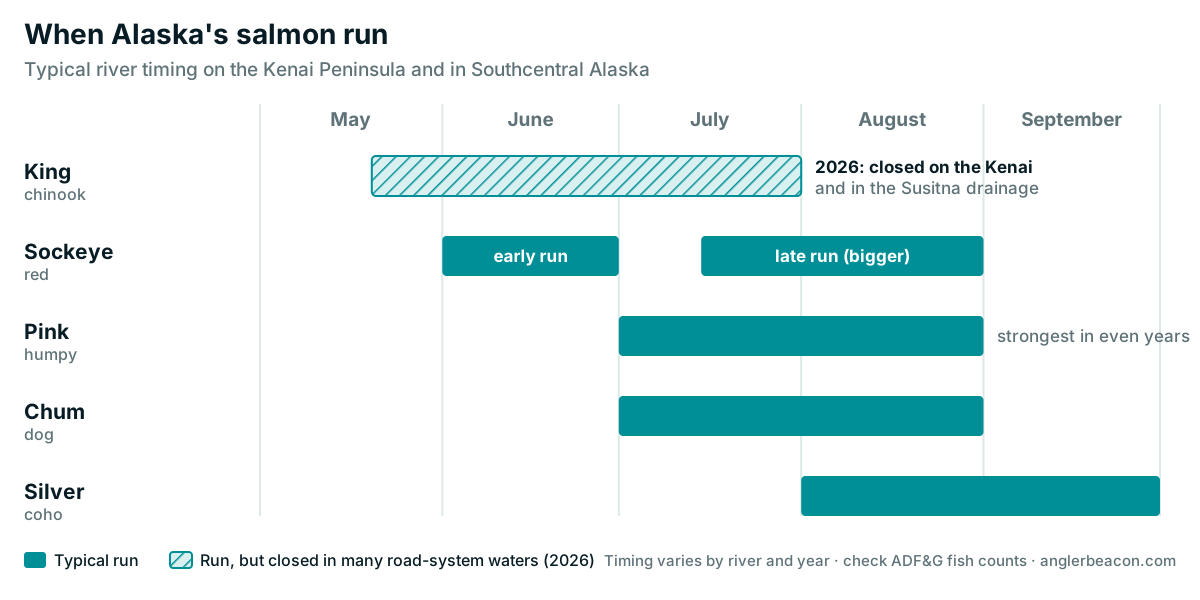
| Species | Also called | Rough river timing | Notes |
|---|---|---|---|
| King | Chinook | Late May – July | Road-system king fishing closed in many places in 2026 |
| Sockeye | Red | June, and mid-July – August | Russian River: early run in June, big late run July–August |
| Pink | Humpy | July – August | Strong in even-numbered years |
| Chum | Dog | July – August | Strong fighters |
| Silver | Coho | August – September | Aggressive biters, late season |
Before any trip, check the ADF&G fish counts (Kenai River sonar, Russian River weir). They show how many fish have actually entered the river, day by day, which is far more useful than any calendar.
King (chinook)
The biggest salmon and the most regulated. In 2026 ADF&G closed king fishing on the Kenai River and in the Susitna drainage, including Willow and Montana Creeks, because returns were too low. Some fisheries stayed open, such as limited hatchery kings early in the season on the Kasilof. Openings change every year, so check the current emergency orders before you plan around kings.
Where kings are open, anglers use heavy tackle: drifting or back-trolling plugs and large spinners through deep runs. Nonresidents need a king salmon stamp on top of their fishing license.
Sockeye (red)
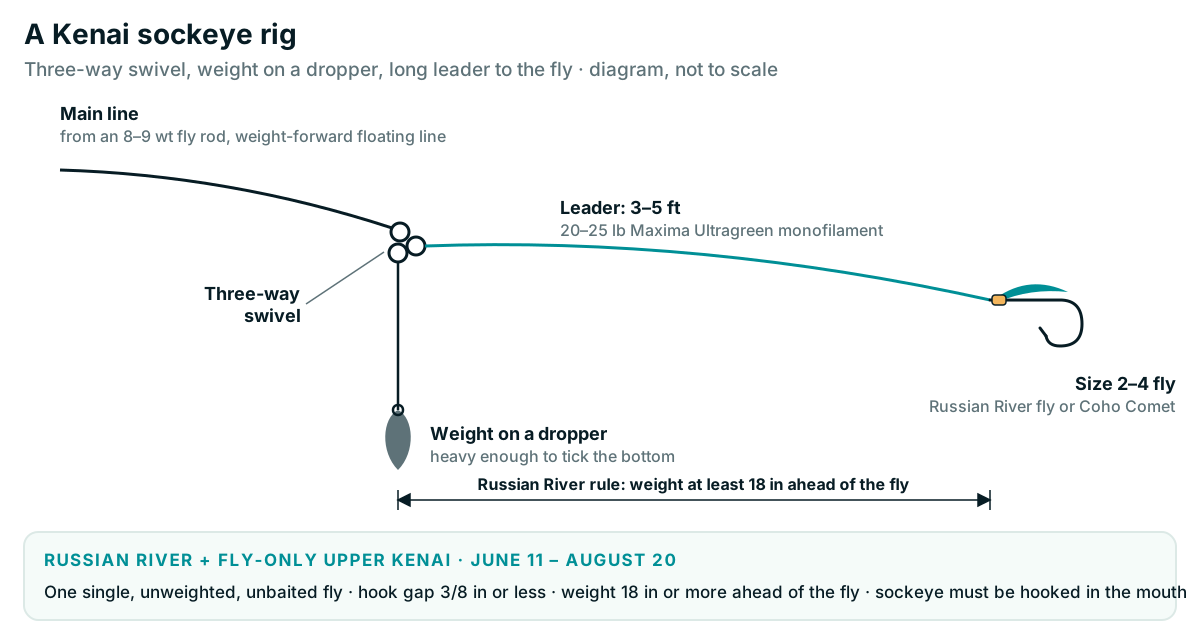
Sockeye are the fish of the Kenai and the Russian River in summer, and the one most visitors come for. The honest truth: sockeye in rivers rarely chase a lure or fly. Most legal sockeye are caught with a drift technique. A fly on a leader, with weight ahead of it, swings low through the lane where the fish are moving, so the leader slides into a fish's mouth. People call it "flossing" or "lining."
My rig:
- Fly: a size 2–4 Russian River fly or Coho Comet.
- Leader: 3–5 feet of 20–25 lb Maxima Ultragreen monofilament.
- Weight: on a three-way swivel attached to the main line.
- Rod and reel: an 8- or 9-weight fly rod with a heavy-duty disc-drag reel and weight-forward floating line.
What matters legally:
- The fish must be hooked in the mouth. A sockeye hooked anywhere else is snagged and must be released.
- On the Russian River (and part of the upper Kenai), from June 11 to August 20, you must use one single-hook, unweighted, unbaited fly with a hook gap of 3/8 inch or less, and any weight must be at least 18 inches ahead of the fly. Size 2 hooks can be close to the gap limit, so check yours.
Silver (coho)
Silvers are aggressive and, unlike sockeye, they really do hit lures and flies. Bright streamers like the Coho Comet, inline spinners, spoons and twitching jigs all work, and they're great fun on an 8-weight fly rod. They run late in the season, from August into September, when the crowds are thinner.
Pink (humpy) and chum (dog)
Pinks come in huge numbers, especially in even-numbered years, and bite readily. That makes them great for kids and beginners. Small spinners and bright flies work. Chums are strong fighters; they are best eaten when caught bright, close to salt water.
On the table
- King and sockeye: rich, high in oil, with deep-red flesh (sockeye especially). For most people, the best eating salmon.
- Silver: milder, great fresh or smoked.
- Pink: lighter and softer. Best eaten fresh or canned, from fish caught close to salt water.
- Chum: best when bright from salt water; commonly smoked.
In my family most of the catch gets smoked or canned to last through the winter, and when we cook it fresh it's mostly on the grill.
Rules that change every season
Bag limits, openings and even which species you may keep change by river, and often mid-season by emergency order. Before you fish:
- Buy the right license, and a king stamp if you're fishing for kings.
- Read the current Southcentral regulation booklet for your river.
- Check ADF&G emergency orders the same week.
- Remember that nonresidents can't take part in the Kenai and Kasilof personal-use dipnet fisheries.
Questions people ask about Alaska salmon
What are the 5 types of salmon in Alaska?
King (chinook), sockeye (red), silver (coho), pink (humpy) and chum (dog). The five-finger trick above is the easiest way to remember them.
When is salmon season in Alaska?
In Southcentral rivers, roughly late May through September. Kings come first, sockeye in June and again from mid-July into August, pinks and chums in July and August, and silvers in August and September. Check the ADF&G fish counts for the actual numbers each week.
Which Alaska salmon tastes best?
Most people rank king and sockeye highest because of their rich, oily, deep-red meat. Silvers are milder. Pinks and chums are best eaten bright, from fish caught close to salt water.
Why don't sockeye bite lures?
Sockeye in rivers rarely chase lures or flies. Most legal sockeye are caught by drifting a fly so the leader slides into the fish's mouth. The fish must be hooked in the mouth to keep.
What is the easiest salmon to catch in Alaska?
Pinks. They come in huge numbers, especially in even-numbered years, and bite small spinners and bright flies readily. That makes them ideal for kids and beginners.
Can you fish for king salmon on the Kenai River in 2026?
No. ADF&G closed both the early and late Kenai River king fisheries for 2026, and kings may not be targeted or kept. The Kasilof had a limited early-season hatchery king opportunity. Always check the current emergency orders.
Build your trip around one species
Pick the fish first, then the dates. For sockeye, aim for the late run on the Kenai and the Russian (mid-July into August). For silvers and fewer people, go later in August. For one week that covers the most, the third week of August, roughly August 15–22, is my pick. For where to go and what a trip like that costs without a lodge, see DIY Alaska fishing on a budget: the road-system guide.