A lot of people think fishing Alaska means a floatplane and a lodge that costs more than a used truck. It doesn't have to. Some of the best salmon and trout water in the state runs right next to the road between Anchorage and the Kenai Peninsula, and you can fish it with a rental, a fishing license and an early alarm.
What surprises most visitors is exactly that: roadside access, lots of fish, and a lot of them in one place. You can park, walk a few minutes and be standing in a river full of salmon. This guide covers where to go, how to get around, what gear to bring, what it costs, and the rules visitors most often miss.
| Question | Short answer |
|---|---|
| Best base for a first trip | Cooper Landing and the Russian River / upper Kenai |
| Best way to get around | A camper van |
| Best single week | Roughly August 15–22 |
| Gear | 8–9 wt fly rod for salmon, 5–6 wt for trout |
| Biggest rule to know | Sockeye must be hooked in the mouth; nonresidents can't dipnet |
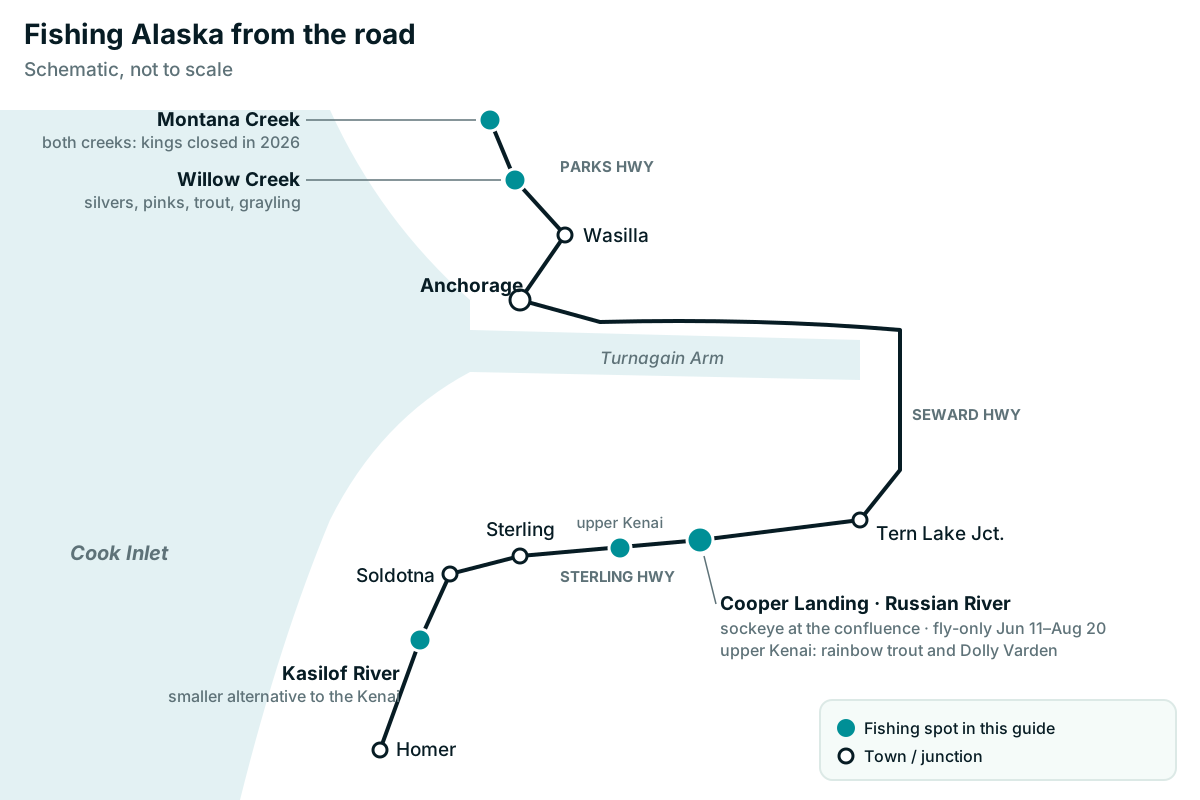
Where to fish: the Kenai Peninsula
The Russian River and the Kenai–Russian confluence
This is the best-known sockeye fishery you can drive to, at Cooper Landing on the Sterling Highway. Sockeye come through in two runs: an early run in June, peaking around mid-June, and a much bigger late run from mid-July into August, when the lower Russian and the confluence fill with fish.
You reach it from the Russian River Campground trails or by the Russian River Ferry, a cable ferry across the Kenai that usually runs through the summer. Check current fees and hours before you go.
Get there before 7 a.m. I like to be on the water before 6:00. After about 7 the parking fills up, and at the peak of the run it fills fast. If you want more room, walk: it gets quieter upstream along the Angler's Trail boardwalk or toward the Russian Lakes Trail. Most people fish within sight of where they parked, so a few minutes of walking changes everything.
Expect crowds at peak. Locals call it "combat fishing" for a reason. Be patient, give people room, and call "fish on" when you hook up so others can reel in.
The upper Kenai River
The upper Kenai is my water for trout. Rainbow trout and Dolly Varden here follow the salmon, and fishing gets better through late summer as the salmon spawn and the trout feed on eggs. Part of the upper Kenai near the Russian is fly-fishing-only in summer, the same as the Russian itself (see the rules below).
Also on the road system
The Kasilof River, farther down the peninsula, is a smaller alternative to the Kenai. North of Anchorage, Parks Highway streams such as Willow Creek and Montana Creek hold silvers, pinks, rainbow trout and grayling. King salmon fishing was closed in 2026 on the Kenai River and in the whole Susitna drainage, which includes Willow and Montana Creeks, so don't plan a king trip on the road system without checking the current emergency orders.
Getting around: get a camper van
For a first-timer, a camper van is way better than a car. During the peak runs, campgrounds and motels near the river fill up, and the best fishing is early in the morning. With a camper you sleep near the water, cook your own food and you're on the river at 6 a.m. instead of driving in from a motel. Camper vans cost more per day than a car, so book early and compare prices.
Rental cars in summer typically run about $100–250 a day. Stock up in Anchorage before you head south: groceries, a cooler, bear spray and tackle are easier to find and cheaper there than in the small towns along the way.
Bears and fish waste: read this
Brown and black bears use the same rivers you do, especially the Russian. Carry bear spray where you can reach it, keep your catch close, and never leave fish or a backpack unattended on the bank. At the Russian River the rule is "stop, chop and drop": cut fish carcasses into small pieces and throw them into fast-moving water so they don't draw bears to the trails.
Gear: what I actually use
For salmon
- Rod: an 8-weight or 9-weight fly rod.
- Reel and line: a heavy-duty disc-drag fly reel with standard weight-forward floating line. Sockeye and silvers will test your drag.
- Sockeye rig: a size 2–4 Russian River fly or Coho Comet on 3–5 feet of 20–25 lb Maxima Ultragreen monofilament, with the weight on a three-way swivel attached to the main line.
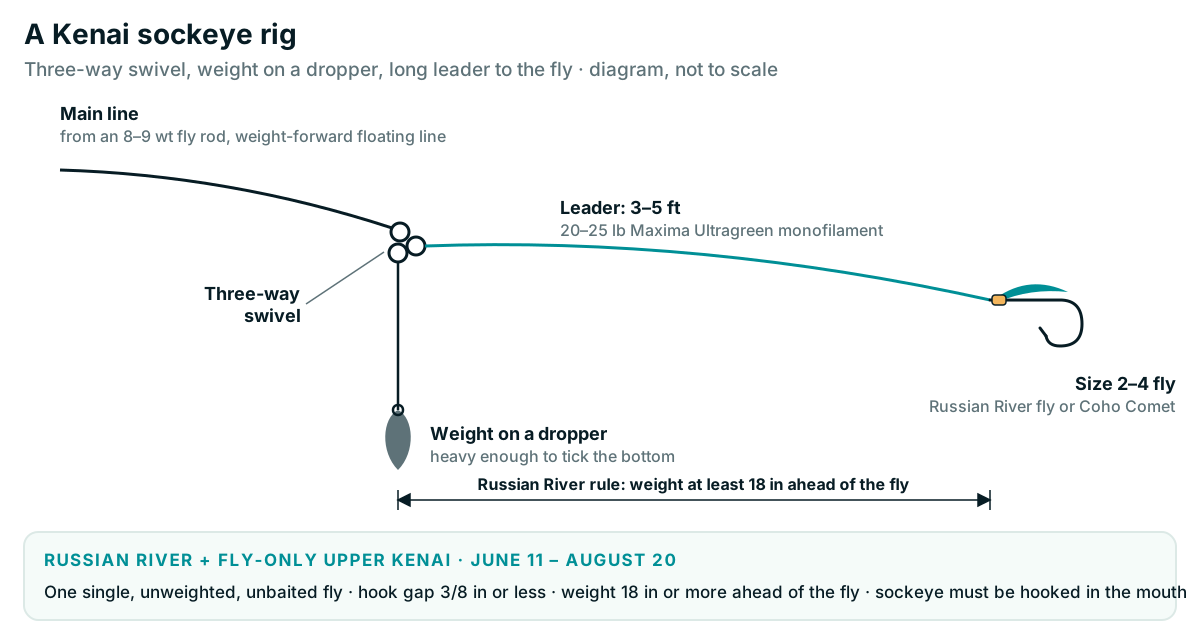
On the Russian River and the fly-fishing-only part of the upper Kenai, the fly must be a single, unweighted, unbaited hook with a gap of 3/8 inch or less, and any weight must be at least 18 inches ahead of the fly. A 3–5 foot leader keeps the weight far enough away. Size 2 hooks can be close to the gap limit, so check yours.
For trout
- Rod: a 5-weight or 6-weight fly rod.
- Reel: a standard click-and-pawl or light disc-drag reel matched to the rod.
- Line: a weight-forward floating line that can turn over a heavy indicator and split shot.
Everything else
Waders (or at least waterproof boots), polarized sunglasses, pliers, a net and a cooler. If you don't fly fish, a medium-heavy spinning combo works on water where spinning gear is allowed. It isn't allowed in the fly-fishing-only areas.
The rules visitors most often miss
- License (and king stamp). Nonresidents need a sport fishing license, plus a king salmon stamp to fish for kings.
- Sockeye must be hooked in the mouth. A fish hooked anywhere else is snagged and must be released.
- Fly-fishing-only water. The Russian River and part of the upper Kenai are fly-fishing-only from June 11 to August 20 (the rig rules are in the gear section above).
- No dipnetting for visitors. The Kenai and Kasilof personal-use dipnet fisheries are for Alaska residents only. Nonresidents can't dipnet, handle the gear or even help clean the fish.
- Emergency orders. Limits and openings on the Kenai Peninsula often change mid-season. Check ADF&G emergency orders the week you fish.
What it costs
Nonresident license prices from the Alaska Department of Fish and Game:
| Nonresident | 1 day | 3 days | 7 days | 14 days | Annual |
|---|---|---|---|---|---|
| Sport fishing license | $15 | $30 | $45 | $75 | $100 |
| King salmon stamp (only for kings) | $15 | $30 | $45 | $75 | $100 |
A rough week for two people, not counting flights:
| Item | Rough cost for a week |
|---|---|
| Rental car ($100–250 a day) | $700–1,750 |
| Groceries for a couple | $200–250 |
| Two 7-day fishing licenses | $90 |
| Campground, ferry and parking fees | Varies, so check current rates |
| Gear bought locally (flies, cooler, bear spray) | Depends on what you bring |
A camper van costs more per day than a car but replaces most of your lodging. For comparison, a remote fly-in lodge usually costs several thousand dollars per person for a week.
When to go
- June: early-run Russian River sockeye, peaking around mid-June.
- Mid-July to early August: the big late sockeye run on the Kenai and the Russian, with the biggest crowds.
- August–September: silver salmon, and trout fishing improves as the salmon spawn.
- Even-numbered years: pink salmon are abundant in many Southcentral streams.
If a friend could come for only one week, I'd tell them the third week of August, roughly August 15–22.
Before you book, look at the ADF&G fish counts (Kenai River sonar, Russian River weir). They show how many fish are actually in the river day by day. For when each species runs and how to fish it, see the 5 types of salmon in Alaska: run timing, tactics and rules.
Questions people ask about a DIY Alaska fishing trip
How much does a DIY fishing trip to Alaska cost?
For two people, a week on the road system runs roughly $1,000–2,100 for the rental car, groceries and two 7-day licenses, before flights, campground fees and any gear you buy there. A remote fly-in lodge usually costs several thousand dollars per person.
Do you need a guide to fish the Kenai and Russian River?
No. Much of the Russian River and the upper Kenai is reachable from the road on foot, and you can fish it on your own with the right license and tackle. A guide is worth it if you want to fish from a boat or want someone to show you the water on your first day.
When is the best time to fish the Russian River?
The early sockeye run peaks around mid-June, and the much larger late run comes from mid-July into August. On any day, get there before 7 a.m., when the parking starts to fill.
Is the Russian River fly fishing only?
Yes, from June 11 to August 20, together with part of the upper Kenai: one single, unweighted, unbaited fly with a hook gap of 3/8 inch or less, and any weight at least 18 inches ahead of the fly.
Can nonresidents dipnet in Alaska?
No. The Kenai and Kasilof personal-use dipnet fisheries are only for Alaska residents. Visitors can't dipnet, handle the gear or help clean the fish.
Do I need a king salmon stamp?
Only if you fish for kings. Nonresidents need it on top of the fishing license. In 2026 king fishing was closed on the Kenai River and in the Susitna drainage, so most road-system visitors won't need one.
The bottom line
You don't need a lodge to fish Alaska. Rent a camper, buy a license, get to the river before 7, walk a little farther than everyone else, and respect the bears and the rules. The road system puts some of the best salmon and trout fishing in the world a few minutes from the pavement.
Sources
- ADF&G: Sport fishing license and king salmon stamp prices
- ADF&G: Fish counts
- ADF&G: Fishing the Russian River (PDF)
- ADF&G: Russian River Sanctuary opening, 2026
- Kenai River king salmon fishery closed, 2026
- King salmon closures on the Susitna and Little Su
- Chugach National Forest: Russian River Campground