Northern pike are the strangest fish story in Southcentral Alaska. They don't belong here. Someone illegally stocked them in the Susitna basin back in the 1950s, and today they live in more than 150 lakes and rivers in the Mat-Su, where they eat young salmon and trout. That's why the rules for pike are the opposite of almost every other fish: no limit, open all year, and releasing a live pike is illegal. They're also aggressive, hard-fighting and good to eat once you know how to get around the Y-bones.
I make a few dedicated pike trips every season, in summer and through the ice, mostly on Long Lake near Willow and Tanaina Lake, with occasional trips to Red Shirt Lake. This guide covers why pike are a problem, the 2026 rules, where pike are through the seasons, the tackle and baits I use, ice fishing with tip-ups, safe handling and the five-piece fillet for boneless pike.
| Question | Short answer |
|---|---|
| Where | Mat-Su lakes such as Long Lake near Willow and the Nancy Lake Recreation Area (Tanaina, Red Shirt) |
| Rules | Invasive: no limit, open year-round, live release prohibited |
| Best time | Just after ice-out; late winter through the ice is a close second |
| Summer tackle | 7 ft medium-heavy rod, 30 lb braid, wire leader, red-and-white spoon |
| Through the ice | Tip-ups with dead herring in 5–15 ft near weed edges; 5 lines only on listed lakes |
| Typical size | 18–26 inches; over 30 inches is a good one |
Why pike are a problem in the Mat-Su
Northern pike are native to Interior and western Alaska, but not to Southcentral. According to ADF&G, they were most likely first introduced illegally to Bulchitna Lake in the Susitna drainage in the 1950s, probably by people who wanted a local pike fishery. Since then they've spread to more than 150 lakes and rivers in the Mat-Su.
The problem is what they eat. Salmon and trout in Southcentral never evolved with pike and have few defences against them, and studies of pike stomachs have found large numbers of juvenile king and coho salmon. Warmer water makes it worse, because pike eat more as the water warms.
The local examples I know make it feel very close to home. On Alexander Creek, invasive pike have contributed to the loss of king salmon fishing. At Shell Lake, they've affected sockeye production. That's why ADF&G encourages anglers to keep every pike they catch.
One more rule of thumb: never move pike, alive or as live bait, to another lake. Moving them is how they spread here in the first place.
The 2026 rules for pike in the Mat-Su
The Mat-Su falls under two chapters of the ADF&G Southcentral regulations: Knik Arm (which includes the Nancy Lake area) and the Susitna River drainage (which includes the Willow Creek drainage and Long Lake). Both treat pike the same way:
- Invasive species. Open year-round. No limit.
- Live release is prohibited. You may not put a live pike back in the water. Pike you don't keep for personal use can be disposed of lawfully and safely, which includes returning a dead pike to the water.
- Methods: pike may be taken with sport fishing gear, ice fishing gear, by spear, or by bow and arrow, as long as the arrow is attached to the bow with a line and has a barbed tip.
- Through the ice: you may use two hooks on one line, as long as both are attached to a single piece of bait.
Five lines through the ice, but only on listed lakes
On certain lakes you can fish for pike through the ice with five lines, as long as you use standard ice fishing gear, keep every line closely attended, and release all other species immediately. Examples from the 2026 lists:
- Susitna drainage: Long Lake, Crystal Lake and Shirley Lake (Willow Creek drainage); Alexander Creek and Lake; Shell Lake; and others.
- Knik Arm: Memory, Lynda, Horseshoe, Prator and other listed lakes, plus the Nancy Lake Recreation Area.
Some lakes add their own conditions. On Big, Mirror and Flat Lakes and on Nancy Lake itself, five lines are allowed only November 1 – March 15, from 8 a.m. to 5 p.m., the hook gap must be at least 3/4 inch, bait must be a whole herring or smelt suspended above the bottom, and other fish must be released unharmed.
I've used five lines on listed waters such as Long Lake near Willow. I always check the lake-specific rules first, keep everything closely attended and follow the bait and hook requirements. The five-line allowance does not apply to every lake, and other species have their own rules: the Willow Creek drainage lakes, for example, are closed to salmon fishing and catch-and-release only for grayling.
Mat-Su lakes to try
- Long Lake (Willow Creek drainage): one of my regular pike lakes, and on the 2026 five-line list for ice fishing. The lake is closed to salmon fishing, and grayling are catch-and-release only.
- Tanaina and Red Shirt Lakes (Nancy Lake State Recreation Area): two more of my pike lakes. The recreation area is on the five-line list, and it has public-use cabins, which make a winter trip easier.
- Big Lake: pike are present, and five lines are allowed from November 1 to March 15, between 8 a.m. and 5 p.m., with whole herring or smelt and a 3/4-inch hook gap.
- Other five-line lakes in the 2026 lists include Memory, Lynda, Horseshoe and Prator in the Knik Arm area, and Crystal and Shirley Lakes in the Willow Creek drainage.
Pike are in many more waters than these. ADF&G's lake database and the regulation booklets are the best way to check a specific lake before you go.
Where pike are, season by season
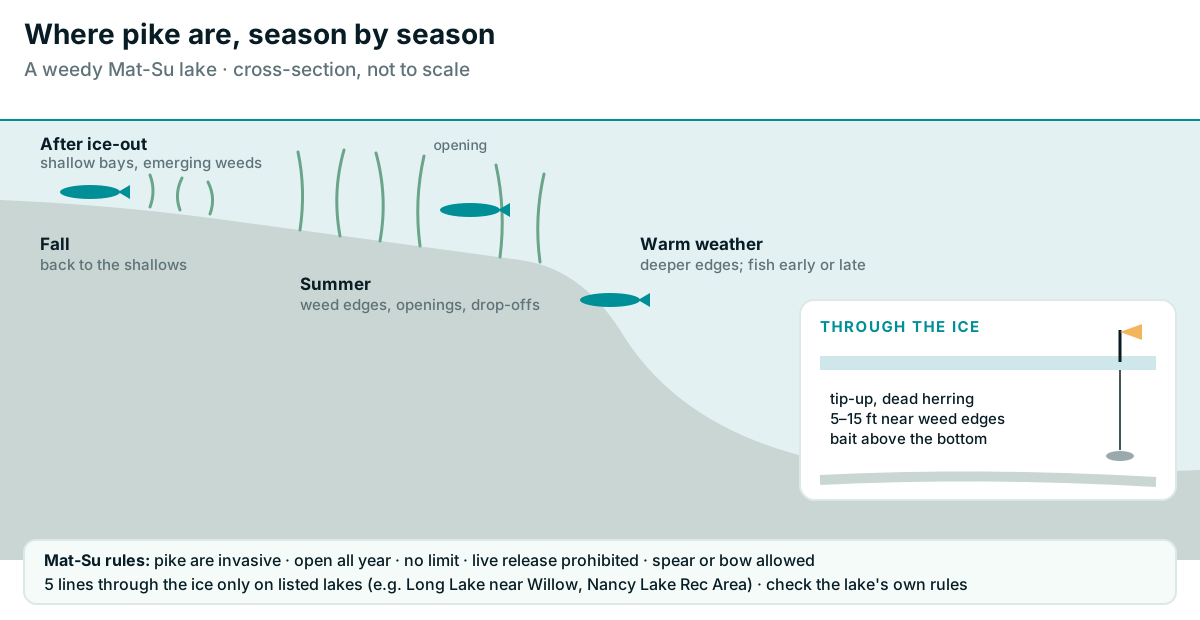
- After ice-out: I start in shallow bays and around emerging weeds. This is my favourite time of the year for pike: finding fish in shallow water and covering the bays with a spoon or spinnerbait.
- Summer: I work weed edges, openings in the vegetation and nearby drop-offs.
- Warm weather: I pay more attention to deeper edges and fish early or late in the day.
- Fall: as the water cools, I try the shallows again.
- Winter: near weed edges in about 5–15 feet of water, through the ice. Late winter is a close second favourite, if the ice is good.
Summer tackle and lures
My summer setup is simple and strong:
- Rod: a 7-foot medium-heavy spinning or casting rod.
- Line: 30-pound braid. It cuts through weeds and gives you control near cover.
- Leader: wire. I don't want a pike biting through the line, and pike teeth cut ordinary line easily.
Lures I carry:
- Red-and-white spoons: usually my first choice.
- Spinnerbaits for covering bays and weedy flats.
- Weedless soft plastics for working into the vegetation.
- A few topwater lures for calm, shallow water.
Cast along weed edges and past openings, and bring the lure back steadily. Pike often hit right at the edge of the weeds or as the lure comes out of an opening. Don't rush: one of the most common mistakes is fishing too fast.
Boat, kayak or shore?
Usually I fish from a small boat, which makes fishing the weed edges much easier. I also enjoy a kayak on sheltered water in calm weather. You can fish from shore where there's good public access, but vegetation often limits how much water you can reach.
Pike through the ice
Through the ice, I mostly use tip-ups baited with dead herring, although I enjoy jigging a spoon while I watch them. I usually start in roughly 5 to 15 feet of water, with the bait suspended above the bottom near weed edges.
A few practical points:
- Check whether your lake allows five lines, and any special conditions (dates, hours, hook gap, bait).
- Closely attended means you can see and get to every line quickly. Don't spread tip-ups farther than you can watch.
- Remember that a dead bait fish is the safe choice. Never bring live fish from another water.
- If you catch a trout or char on a pike line where five lines are allowed, release it immediately.
For ice safety, the gear checklist and how to check thickness, see my guide to ice fishing around Anchorage and the Mat-Su.
Handling pike safely
Pike have a mouth full of sharp teeth, and most of the hooks you use are big. I carry:
- A landing net
- Long pliers
- Hook cutters
- Jaw spreaders, for when they're needed
- Gloves, which help with grip
I keep my fingers away from the mouth, watch for exposed hooks, and keep the fish controlled while I unhook it. Gloves help, but they're no substitute for care.
Keeping and cleaning your pike
Because live release is prohibited, plan to keep what you catch. I dispatch pike promptly and keep them cold, then eat them or share properly cleaned fish with family and friends.
The five-piece fillet: boneless pike
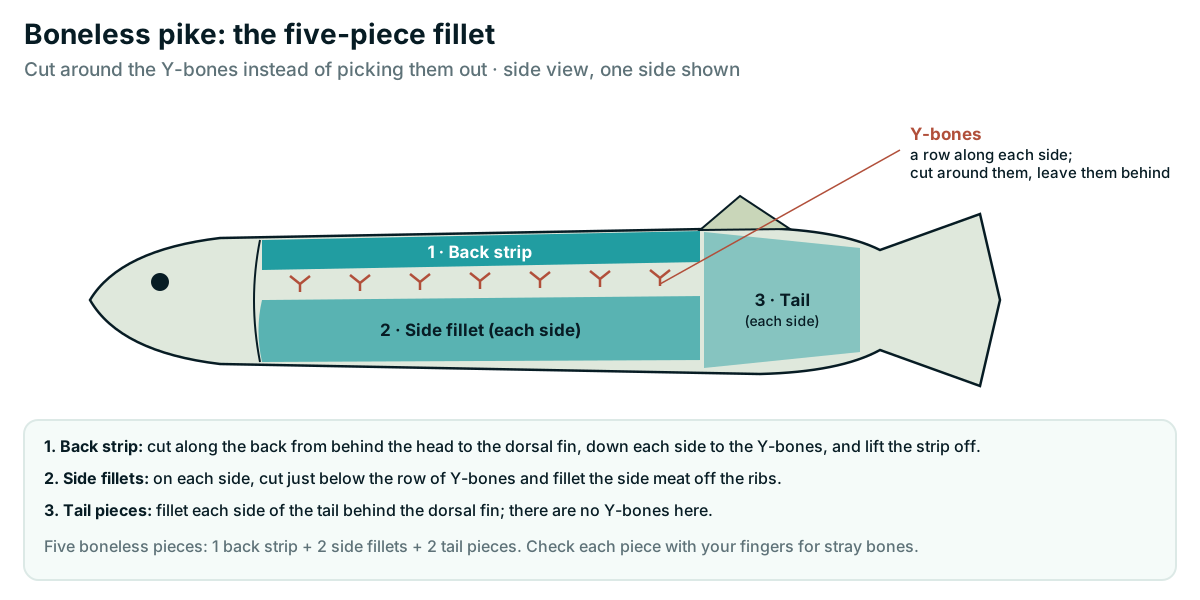
The reason people think pike are "too bony" is the row of Y-bones that runs along each side above the ribs. Instead of picking them out of a normal fillet, I use the five-piece method and cut around them:
- Back strip: cut along the back from behind the head to the dorsal fin, down each side to the Y-bones, and lift the boneless strip off.
- Side fillets: on each side, cut just below the row of Y-bones and fillet the side meat off the ribs.
- Tail pieces: fillet each side of the tail behind the dorsal fin. There are no Y-bones here.
That gives five boneless pieces. I always check the finished pieces carefully with my fingers for any remaining bones.
Cooking pike
Pike has firm, white, mild meat. In my family we usually cut the boneless pieces into chunks, lightly coat them and pan-fry them. It's also good baked with butter, lemon and garlic. And fish tacos are a favourite, especially with crunchy cabbage and a little sauce.
A June morning on Long Lake
One early-June morning, a friend and I were fishing Long Lake near Willow from a small boat. He cast a red-and-white spoon along a weed edge, and a pike hit just as he brought it past an opening. It stayed low and pulled hard, then turned sharply beside the boat when I reached with the net. We finally landed it: about 34 inches, the biggest pike I've seen caught. I remember being surprised by how broad its head looked when it came alongside the boat, and my friend grinning while I tried to untangle the spoon from the net with the long pliers.
Most of the pike I catch are smaller, around 18–26 inches, and anything over 30 inches gets my attention.
Mistakes I see with pike
- A leader pike can bite through. Use wire.
- Fishing too fast. Work the weed edges and openings carefully.
- Overlooking shallow water, especially in spring and fall.
- No long pliers and no plan for handling and keeping the catch.
- Assuming the five-line rule applies everywhere. It doesn't.
Guided pike trips
There are Mat-Su guides who offer pike fishing and winter trips. When booking, ask specifically whether the outing targets pike, which lake they use and what equipment is included. Some winter trips concentrate on trout or char, so make your preference clear.
Safety on the ice and on the water
- On the ice: check thickness along your route with a spud bar and measured test holes, carry ice picks and a throw rope, avoid inlets and questionable areas, and remember that one good measurement doesn't tell you about the whole lake.
- In a boat or kayak: wear a life jacket, check the wind forecast, and carry spare warm clothing in a dry bag.
Your first Mat-Su pike trip: a simple plan
- Pick the season. Right after ice-out for shallow fish, or late winter through the ice.
- Check the lake's rules in the Knik Arm or Susitna chapter, especially if you plan to use five lines.
- Buy your license online from ADF&G.
- Pack a 7 ft medium-heavy rod, 30 lb braid, wire leaders, red-and-white spoons and a spinnerbait (or tip-ups and dead herring in winter), plus a net, long pliers, hook cutters, jaw spreaders and gloves.
- Start shallow near weeds and work the edges slowly.
- Keep everything you catch. Dispatch it, keep it cold, and bring a cooler.
- Fillet with the five-piece method at home and check for bones.
Questions people ask about pike fishing in Alaska
Are northern pike invasive in Alaska?
In Southcentral Alaska, yes. Pike are native to Interior and western Alaska, but they were illegally introduced to the Susitna basin in the 1950s and have spread to more than 150 Mat-Su lakes and rivers, where they eat juvenile salmon and trout.
Is there a limit on northern pike in the Mat-Su?
No. In the Knik Arm and Susitna drainages, pike are open year-round with no limit.
Can you catch and release pike in the Mat-Su?
No. Live release is prohibited. Keep the pike you catch; pike you don't keep for personal use may be disposed of lawfully, including returning a dead pike to the water.
How many lines can you use for pike through the ice?
Normally two. On listed lakes, such as Long Lake near Willow or lakes in the Nancy Lake Recreation Area, five lines are allowed for pike if the gear is closely attended and other fish are released. Some lakes have extra date, hour and bait conditions.
What is the best lure for pike in Alaska?
A red-and-white spoon is my first choice. Spinnerbaits, weedless soft plastics and topwater lures also work, always on a wire leader.
Can you eat northern pike?
Yes. The meat is firm, white and mild. Use the five-piece fillet method to get boneless pieces around the Y-bones, then pan-fry, bake or make fish tacos.
When is the best time to fish for pike in the Mat-Su?
Right after ice-out, when pike are in shallow bays and around emerging weeds. Late winter through the ice is a close second, as long as the ice is safe.
Can you spear or bowfish pike in Alaska?
In the Mat-Su, yes. Pike may be taken by spear or by bow and arrow, as long as the arrow is attached to the bow with a line and has a barbed tip. Check local regulations for any area exceptions.
More from Alaska: ice fishing around Anchorage and the Mat-Su, Kenai River silver salmon and chain pickerel vs northern pike.
Sources
- ADF&G: 2026 Knik Arm sport fishing regulations (PDF)
- ADF&G: 2026 Susitna River drainage sport fishing regulations (PDF)
- ADF&G: 2026 Southcentral regional regulations (PDF)
- ADF&G: Northern pike
- ADF&G: Problems with pike
- USGS: Introduced northern pike consumption of salmonids in Southcentral Alaska
- Anchorage Daily News: Warmer water spurs invasive pike to eat more (2026)