Silver salmon, or coho, are my favourite salmon to fish for on the Kenai. They come in late summer and fall, after the sockeye crowds have thinned out, they hit lures and flies hard, they jump, and they're excellent on the table. This guide is how I fish for them: when the runs come, the parts of the river I fish, the spinners, eggs and flies I use, where silvers hold, and the 2026 rules, which differ more from one section of the river to the next than most people expect.
| Question | Short answer |
|---|---|
| When | Two runs: August, and a usually bigger late run in September into October. I prefer the late run. |
| Where | Lower river around Soldotna, Centennial and Cunningham Park; middle river at Bings Landing; upper river in September |
| Size | Most fish around 8–12 pounds; mid-teens is a really good one |
| Best lure | Size 4 spinner, silver blade, orange or pink body |
| 2026 limit | 2 coho a day (16 in+), kept at 2 for Sept 1 – Nov 30 by emergency order |
| Key rules | Bait only below the Moose River from Aug 16; a coho lifted from the water must be kept |
When the silvers run
The Kenai gets two coho runs. The first run arrives in August and peaks in the last two weeks of the month. The second, late run starts toward the end of August and is usually the bigger of the two, peaking through September, with good fishing continuing into October, especially in the middle and upper river.
I prefer the late run, from early September into the first half of October. I enjoy the cooler weather and the autumn colours, and the crowds are smaller than in July. If I'm fishing the early run, I aim for the first few weeks of August. For the upper river, September into early October is my window.
Most of the silvers I'd expect to catch are around 8–12 pounds. A fish in the mid-teens feels like a particularly good one. Size isn't everything, though: I'm happiest with a bright fish that fights well and is in good condition for the table.
Early run vs. late run at a glance
| Early run (August) | Late run (September – October) | |
|---|---|---|
| Peak | Last two weeks of August | Mid to late September |
| Bait | Not before August 16; single-hook artificial only until then | Allowed below the Moose River through November 30 |
| Crowds | Overlaps the end of sockeye season | More spread out |
| Weather | Warmer, long days | Cooler, autumn colours, shorter days |
| Fish | Good numbers of bright fish | Usually the bigger run, often bigger fish |
| 2026 limit | 2 per day | 2 per day (emergency order) |
Where I fish for silvers on the Kenai
- The lower river around Soldotna, Centennial and Cunningham Park. This is where I fish most. Cunningham Park is low enough on the river to be tidal.
- The middle river around Bings Landing. Another stretch I like. Remember it's above the Moose River, so it's artificial lures and flies only.
- The upper river, usually later in September, when the silvers have made it all the way up.
I fish from the bank for shorter outings and use a boat when I want to cover more water. Bank anglers should know that from July 1 to August 15, parts of the Kenai's banks are closed to protect the riverbank. The ADF&G booklet has maps of the public access points.
The 2026 rules for silvers, section by section
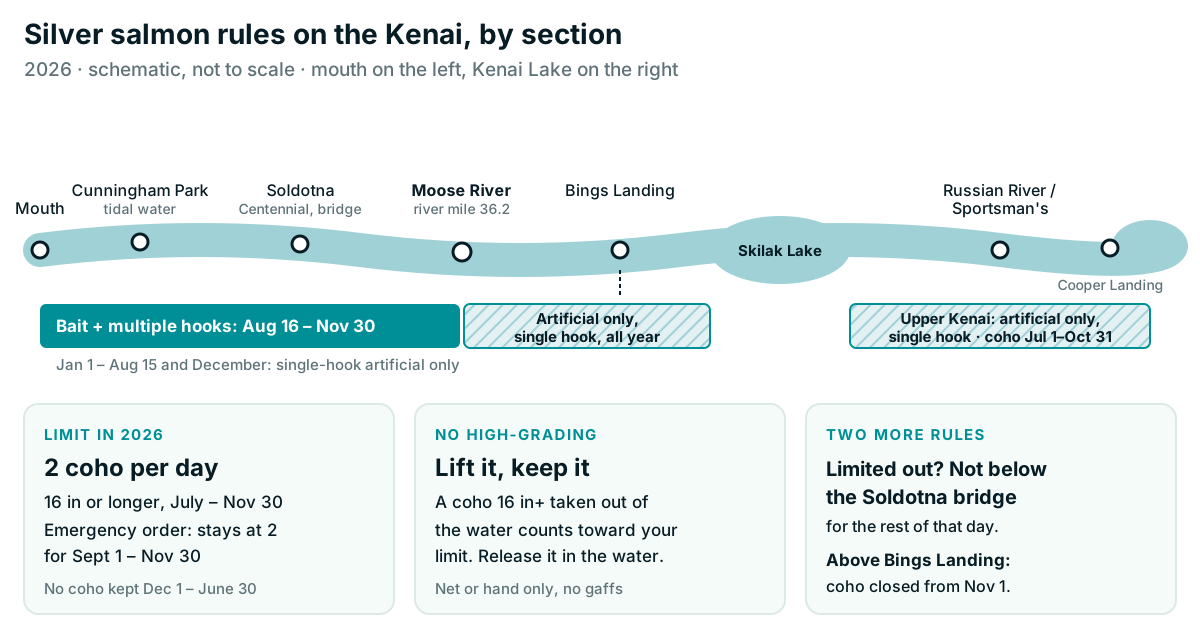
The single biggest mistake I see is assuming the rules are the same everywhere on the river. They aren't. Here's how 2026 works:
The limit: 2 a day in 2026
For coho 16 inches or longer, the limit is 2 per day, 2 in possession, in combination with sockeye and chum. The regulation booklet would normally raise it to 3 on September 1, but an ADF&G emergency order keeps the Kenai River drainage limit at 2 from September 1 through November 30, 2026. Coho under 16 inches have a separate, larger limit. No coho may be kept from December 1 to June 30.
Where bait is allowed
- From the mouth up to the Moose River confluence (about river mile 36.2): bait and multiple hooks are allowed from August 16 to November 30. The rest of the year it's one unbaited, single-hook artificial lure or fly.
- From the Moose River up to Skilak Lake: only one unbaited, single-hook artificial lure or fly, all year.
- The upper Kenai, above Skilak Lake: also artificial only, single hook with a 3/8-inch gap or less, with coho open July 1 – October 31.
The rules that catch people out
- No high-grading. A coho 16 inches or longer that you remove from the water must be kept and counts toward the bag of the person who hooked it. If you want to release one, it has to stay in the water.
- Limited out? Stay above the Soldotna bridge. Once you keep a bag limit of Kenai coho, you can't fish the Kenai downstream of the Soldotna bridge for the rest of that day.
- Above Bings Landing, coho fishing closes on November 1.
- No gaffs. Salmon may only be landed with a net or by hand.
- Check emergency orders before every trip. They changed the limit this year, and they can change gear rules too.
Time of day, tides and weather
I prefer early morning. In the tidal lower river around Cunningham Park, I pay attention to the incoming tide, which pushes fresh fish into the river. Farther upstream, the tide doesn't matter; I focus on holding water and river conditions instead.
Overcast weather suits me fine. A modest rise in the river can change where fish gather, but heavy rain and muddy water make fishing harder.
Where silvers hold
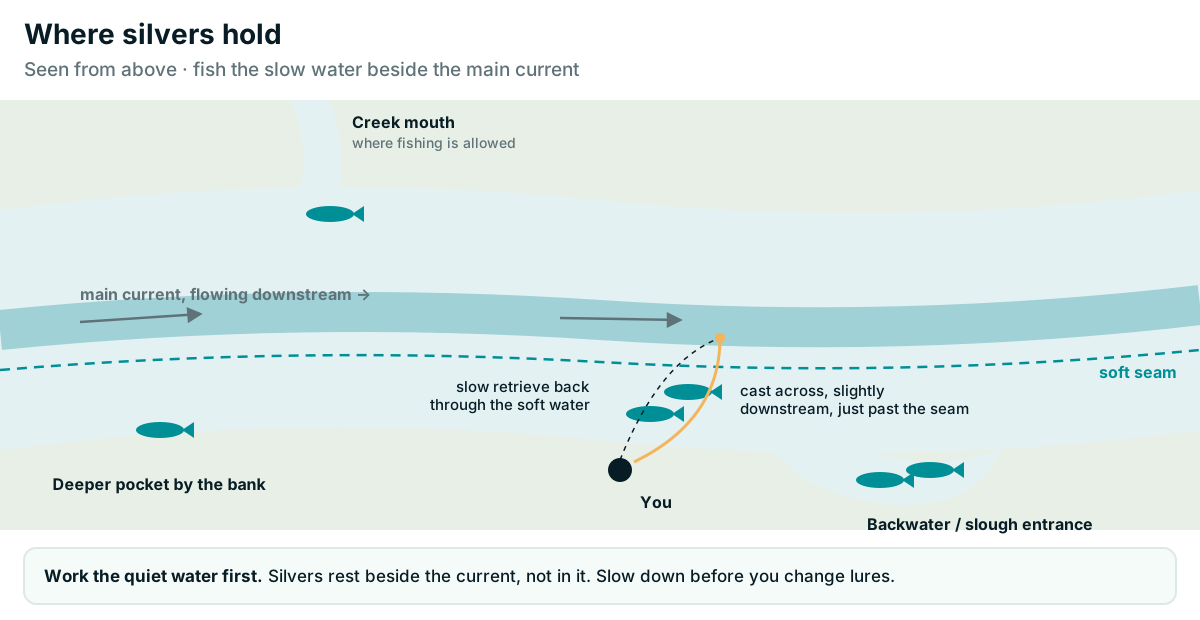
Silvers rest in slower water beside the main current. I look for:
- Backwaters and slough entrances
- Deeper pockets along the bank
- Soft seams, where fast water meets slow
- Creek mouths, where fishing there is permitted
I work the quieter water carefully before moving on. Silvers often sit in a spot for a while, and a fish that ignores the first few casts may take the next one if you change speed or depth.
Spinners: my favourite way to catch silvers
My favourite lure for Kenai silvers is a size 4 spinner with a silver blade and an orange or pink body. I carry sizes 3 to 5, including some chartreuse. Spinners work from the bank or a boat, and silvers hit them hard.
Check your hooks. Most spinners come with a treble hook. Wherever only a single hook is allowed (the whole river until August 15, above the Moose River all year, and the upper Kenai) swap the treble for a single hook before you fish.
How I fish them:
- Cast across and slightly downstream, just past a soft seam.
- Let it sink for a moment, then retrieve slowly, just fast enough to keep the blade turning.
- Bring it back through the soft water where the fish are resting.
- If a fish follows and turns away, slow down on the next cast rather than reaching for a new lure.
When a silver follows but won't bite
A follow is good news: the fish is interested. Don't rip the lure away or switch everything at once. Make the same cast again and change one thing: slow the retrieve, add a short pause, or let the lure run a little deeper. That one change is often all it takes, as my story below shows.
Spoons, twitching jigs and plugs
I also like spoons, and pink or purple twitching jigs in slower water: cast, let the jig sink, then twitch it up and let it fall again. Silvers often take it on the drop. From a boat, I'll use plugs where the location and gear rules allow it.
Cured eggs under a bobber (where bait is legal)
Where bait is allowed, below the Moose River from August 16, cured salmon eggs are hard to beat. I use a commercial salmon-egg cure, follow its instructions and keep the eggs refrigerated while I prepare them. I like firm clusters that stay on the hook.
I tie a small cluster on with an egg-loop knot and fish it under a slip bobber, adjusting the depth so the eggs drift just above the bottom. And I check the current rules and emergency orders before I bring bait to the river.
Fly fishing for silvers
Silvers are great on a fly rod. My setup:
- Rod: an 8-weight.
- Line: a floating line for shallower, slower water, and a sink-tip when I need more depth.
- Leader: fairly strong, usually 12–15 pounds.
- Flies: pink or purple leeches, Egg-Sucking Leeches and single-hook Dolly Llama patterns.
On the upper Kenai and in the artificial-only water above the Moose River, flies must be single-hook and unbaited, so choose patterns that fit the rules for the stretch you're fishing.
Hooking and landing silvers
- Keep your hooks sharp. Check them after every snag.
- Once the fish is on, use steady pressure and let the drag handle the runs. Silvers jump and run hard.
- Don't try to haul the fish straight in. Wear it down, then lead it toward a large landing net and net it headfirst.
- Never use a gaff. It's illegal on the Kenai.
Releasing a silver: keep it in the water
If I intend to release a coho of 16 inches or longer, I keep it completely in the water, including while I unhook it or take a photo. Lifting it out means it must be kept and counted toward my limit. Decide before you lift the fish, not after.
Taking care of your catch
For fish I'm keeping, I dispatch and bleed them promptly, then get them on ice. I usually prefer to fillet at home, where I can work cleanly and portion everything properly. If I'm travelling or have several fish to handle, a processor is convenient. And I keep fish and waste secured from bears.
A September morning at Cunningham Park
One September morning, a friend and I were fishing from the bank near Cunningham Park. We'd had a quiet start when a silver followed my spinner almost to shore and turned away. On the next cast I slowed the retrieve, and it hit hard. It jumped twice and made a strong run before my friend managed to net it. It was about 12 pounds and still bright. What I remember most is both of us laughing afterwards, because that first follow had made us so nervous.
Crowds and etiquette
Silver fishing usually feels more spread out than sockeye season, but good holding spots still attract people. I leave room between anglers and avoid casting across someone's drift or retrieve. If somebody hooks a fish, I reel in when necessary and give them space to land it.
Is a guided silver trip worth it?
For a visitor, it can be. A good guide helps you locate fish and choose a presentation that suits the conditions. As one current example, a Cooper Landing operator lists silver trips at $295 per person for six hours or $330 for a full day, with equipment included; the fishing license and tip are separate. Prices vary, so confirm what's included and which section of the river the trip covers, since the rules and the fishing differ along the river.
Mistakes I see with silvers
- Fishing only the fastest water. Silvers rest beside it.
- Retrieving too quickly. Slow down.
- Using more weight than necessary.
- Changing lures constantly without adjusting depth or presentation.
- Assuming the rules are identical everywhere on the river.
- Lifting a fish for a photo before deciding whether to keep it.
Your first silver salmon day: a simple plan
- Check the rules for your section, plus any emergency orders for that week.
- Buy your license online from ADF&G.
- Pack a medium-heavy spinning rod or an 8-weight, size 3–5 spinners in orange, pink and chartreuse, a few pink or purple jigs, a big net, pliers, a cooler with ice and bear spray.
- Get there early, and on the lower river, check the tide table.
- Find soft water beside the current: seams, bank pockets, slough entrances.
- Fish it slowly before moving on.
- Decide in the water whether you're keeping a fish, then bleed and ice it right away.
Cooking silver salmon
At home we like silvers grilled or baked with lemon, garlic and butter. Sometimes we use a simple glaze of soy sauce and a little honey. I portion and vacuum-seal fish for the freezer, and we enjoy having some professionally smoked for snacks and sandwiches.
Questions people ask about Kenai River silver salmon
When is silver salmon season on the Kenai River?
Coho run from late July into fall. The first run peaks in the second half of August, and the bigger late run peaks in September with good fishing into October. In the lower river, coho can be kept through November 30.
What is the silver salmon limit on the Kenai in 2026?
Two coho 16 inches or longer per day. An ADF&G emergency order keeps the Kenai River drainage limit at two from September 1 to November 30, 2026, instead of the usual three.
Can you use bait for silver salmon on the Kenai?
Only from the mouth up to the Moose River confluence, from August 16 to November 30, when bait and multiple hooks are allowed. Above the Moose River, and on the upper Kenai, it's one unbaited, single-hook artificial lure or fly.
What is the best lure for Kenai silvers?
A size 4 spinner with a silver blade and an orange or pink body is my favourite. Pink or purple twitching jigs and spoons work well too, especially in slower water.
How big are Kenai River silver salmon?
Most are around 8–12 pounds, and a fish in the mid-teens is a very good one. Late-run fish tend to be bigger.
Can I catch and release silver salmon on the Kenai?
Yes, but a coho 16 inches or longer must stay in the water. If you lift it out, you have to keep it and it counts toward your limit.
Do you need a guide for Kenai silvers?
No. There's good bank access around Soldotna and Cunningham Park. A guide helps a first-time visitor find fish faster and fish from a boat.
More on the Kenai: Kenai River trout fly fishing, DIY Alaska fishing on a budget and the 5 types of salmon in Alaska.
Sources
- ADF&G: 2026 Kenai River sport fishing regulations (PDF)
- ADF&G: Northern Kenai emergency orders, including "Kenai River Drainage Coho Salmon Limit Remains At Two Fish"
- Kenai Fishing: Salmon run timing
- Kenai.Fishing: Silver salmon on the Kenai, 2026
- Marlow's on the Kenai: Silver salmon fishing by month