When the lakes around Anchorage freeze, a lot of people put their rods away until spring. I don't. Ice fishing is one of my favorite ways to spend a winter afternoon: a short walk from the car, a couple of holes in the ice, a thermos of coffee, and stocked rainbow trout that bite all winter. You don't need a boat, a lodge or much money, and it's one of the best ways to get kids fishing.
This guide covers the lakes I fish in Anchorage and the Mat-Su, when the season starts, how I check the ice, what gear and bait work, where the fish are under the ice, and the rules and safety basics a first-timer needs.
| Question | Short answer |
|---|---|
| Where | Stocked lakes: Jewel, Sand and Mirror in Anchorage, Kepler–Bradley near Palmer |
| When | From safe ice in November or December; February to early March is my favorite stretch |
| Ice | I wait for at least 6 inches of solid, clear ice to walk on |
| Target | Stocked rainbow trout and landlocked salmon, with char as a bonus |
| Setup | Short light ice rod, 6–8 lb line, small jig tipped with shrimp or cured roe |
| Rules | Current-year license, 2 lines with one hook each, closely attended |
Where to ice fish around Anchorage and the Mat-Su
The Alaska Department of Fish and Game stocks a number of lakes around Anchorage and the Mat-Su Valley, some of them specifically for ice fishing. Catchable-size landlocked king salmon go into selected lakes in late October or early November, and many lakes still hold rainbow trout, Arctic char and grayling left over from summer stocking.
Jewel Lake (Anchorage): my favorite
Jewel Lake is my favorite for a simple afternoon outing. It's convenient, it's right in town, and I enjoy fishing for its stocked rainbows without making a big expedition out of it. ADF&G stocks Jewel every year with rainbow trout and landlocked salmon.
Sand Lake (Anchorage)
Another in-town lake I fish often. Sand Lake is stocked every year with rainbow trout, landlocked salmon and Arctic grayling.
Mirror Lake (Chugiak)
North of Anchorage along the Glenn Highway, Mirror Lake is stocked with rainbow trout in spring and summer and with king salmon in the fall and winter, which makes it a good winter option.
Kepler–Bradley Lakes (near Palmer)
I make occasional trips to the Kepler–Bradley Lakes State Recreation Area, off the Glenn Highway near Palmer. ADF&G stocks these lakes with rainbow trout, Arctic char, Arctic grayling and landlocked salmon, so there's more variety than on the in-town lakes. It's a nice change when I want a longer outing.
Other options
Other Anchorage lakes stocked for winter fishing include Beach, Campbell Point (Kincaid Park), Clunie and Delong. On the Kenai Peninsula, ADF&G stocks more than two dozen lakes, such as Johnson Lake near Kasilof and Longmere Lake near Soldotna. Stocking changes from year to year, so check the ADF&G stocking records for the lake you plan to fish.
For burbot, northern pike or lake trout, I'd plan a separate trip to a lake that actually supports them. The stocked lakes are for trout and landlocked salmon.
When the ice fishing season starts
For me the season usually starts sometime in November or December, depending on how the freeze goes. I don't start just because a lake looks frozen. My favorite stretch is February into early March, when there's more daylight and I can spend a comfortable afternoon on the ice, as long as the ice is still good.
ADF&G notes that the best fishing is often right after freeze-up, when oxygen levels are still high and the fish are active, and again just before breakup. Those are also the most dangerous times to be on the ice, so be extra careful early and late in the season.
One thing people forget: Alaska fishing licenses run on the calendar year and expire on December 31. If you go out in January or February, you need the new year's license.
Ice safety: how I check the ice
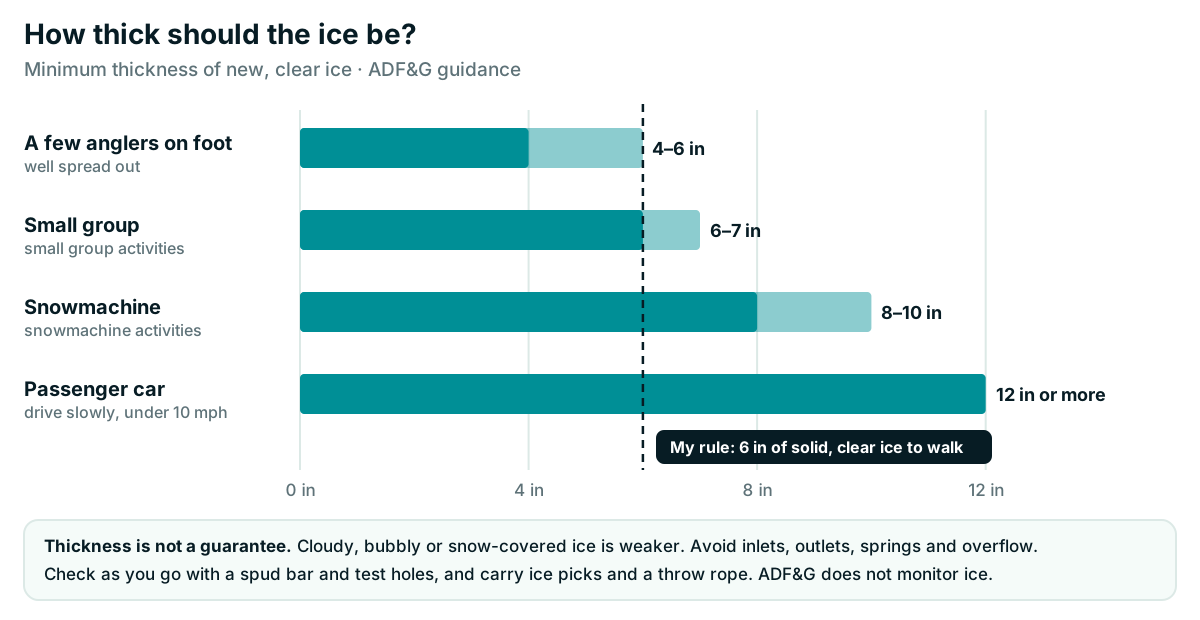
Personally, I wait for at least six inches of solid, clear ice before walking out. ADF&G's general guidance is 4–6 inches of new, clear ice for a few well-spread-out anglers on foot, 6–7 inches for small groups, 8–10 inches for snowmachines and 12 inches or more for cars. But thickness alone doesn't guarantee safety.
This is how I do it:
- I use both a spud bar and an auger. I tap the ice ahead of me with the spud bar as I walk, and drill test holes to measure the thickness along the route, not just once at the shore.
- I avoid inlets, outlets, springs and anywhere that looks questionable. Moving water and springs thin the ice from underneath, and you often can't see it from above.
- I watch for overflow. Water and slush on top of the ice, often hidden under snow, can give way. If I see it, I turn around.
- I carry ice picks and a throw rope. Picks on a cord through your jacket give you something to grip if you ever have to pull yourself out.
A few more facts from ADF&G worth knowing:
- At freeze-up the ice is thickest near shore. At breakup it's the opposite: thickest in the middle.
- Clear ice is strongest. Cloudy ice or ice full of bubbles is weaker, and snow cover insulates the ice and keeps it thinner.
- On big lakes, the ice can be three feet thick in one place and an inch thick a step away.
- ADF&G does not monitor ice conditions. Your safety is your own responsibility.
The rules for ice fishing in Southcentral Alaska
- License: anglers need a current-year sport fishing license. Nonresidents need one from age 16.
- Lines: in most of Southcentral you can fish two lines through the ice, with one hook or lure on each. Some areas allow up to five lines for northern pike. All lines must be closely attended.
- Limits: in Anchorage's stocked lakes, the limit is five fish a day, and only one of them may be 20 inches or longer. Similar limits apply on stocked Mat-Su lakes such as Kepler; check the booklet for your lake.
- Bait: some lakes have bait or tackle restrictions. I always check whether bait is allowed on the lake I'm fishing.
- Ice houses: portable shelters are allowed on all waters. A shelter you leave out needs the land manager's approval, and some, such as the Municipality of Anchorage, require registration.
- Don't waste fish: it's illegal to waste sport-caught fish.
Gear: a simple ice fishing setup
I keep it simple: a short, light or medium-light ice rod, a small spinning reel and 6–8 lb line. I carry small jigs and spoons, plus a plain-hook setup for bait where it's allowed. I mostly jig by hand rather than using tip-ups. ADF&G recommends a similar setup: a simple ice rod with 4–10 lb monofilament and small hooks, sizes 6 through 12. Simple gear is also less likely to freeze up.
The rest of the kit:
- Spud bar and auger. A spud bar works on thinner early-season ice. Once the ice is over 6 inches, an auger is much faster. Keep the blade guard on when you're not drilling.
- Skimmer to clear ice and slush from the hole. A slotted kitchen spoon works.
- Something to measure the ice: a tape measure, or a skimmer with marks on the handle.
- A sled to pull everything. I usually walk out pulling one with the auger, tackle, shelter and a seat. For the local lakes, that's all I need.
- A small sonar, optional but helpful (see below).
- A 5-gallon bucket doubles as a seat and gear carrier.
Bait and lures that work
My first choice is a small jig tipped with a little shrimp or cured salmon roe. Some days a small spoon gets more attention. I start with gentle movements and pauses, then change things if the fish aren't interested.
ADF&G lists cured salmon eggs, canned clams and fresh, raw cocktail shrimp among the best baits for rainbows, char, grayling and landlocked salmon. Popular lures include small spoons, spinners and lead-head jigs. Two tips from them that I agree with:
- Vary the action. Jig, let the lure flutter down, then hold it still for a while.
- Don't use corn. It can block a fish's gut and kill it.
Where the fish are under the ice
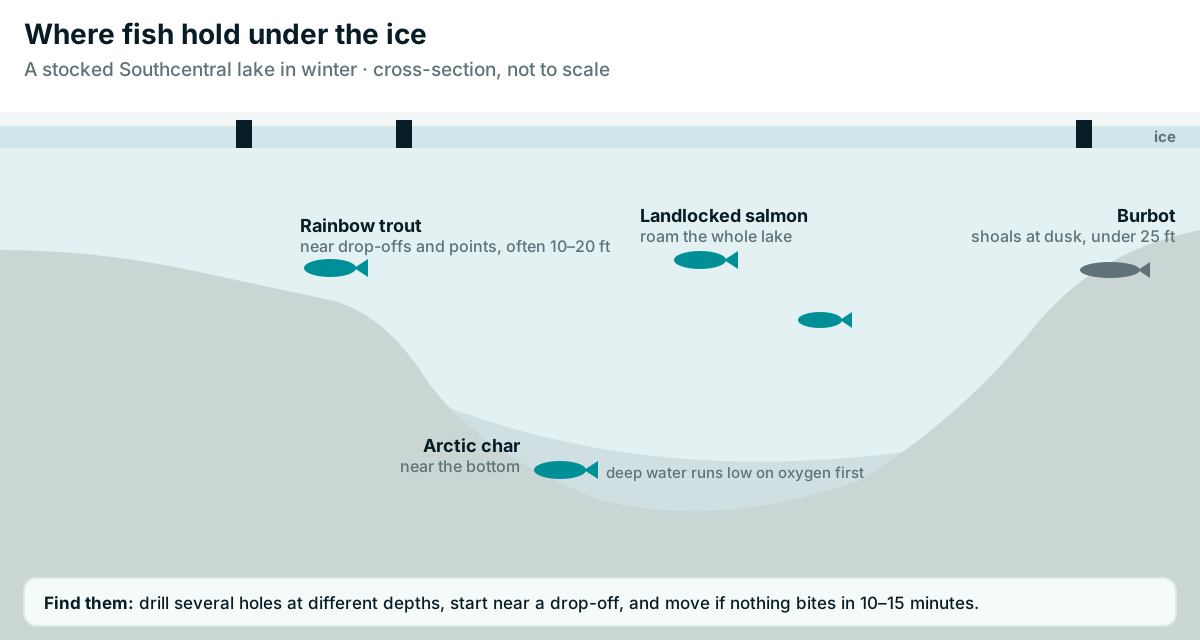
For rainbows I usually start around 10 to 20 feet, especially near a drop-off. I drill several holes at different depths and move between them. A small sonar shows me whether fish are coming through and whether they're near the bottom or suspended higher up.
ADF&G's advice lines up with that: deep water runs out of oxygen first in winter, so fishing is usually best in shallower areas. Rainbows hold off small points, near cover and along the edges of drop-offs. Landlocked salmon roam the whole lake, char stay near the bottom, and burbot move onto shallow gravel bars and shoals in the evening, usually in less than 25 feet of water. If nothing happens within 10 to 15 minutes, check your bait, change depth or try another hole. With two lines, you can fish two depths at once until you find them.
Best time of day
I like late morning through early afternoon. Winter days are short, and that window gives me daylight to get set up and to pack away. Sometimes the bite improves toward dusk, but I always leave enough light for an easy walk back.
Shelters and heaters: be careful with carbon monoxide
I use a portable shelter when it's windy or especially cold. If I use a heater, it has to be suitable for that shelter and used according to its instructions. I keep the upper and lower vents open and run a working carbon monoxide alarm rated for the cold. I never seal everything up just to keep the heat in. Carbon monoxide has no smell, and a small heater in a closed shelter can kill.
What to wear
I wear thermal layers, fleece, insulated outerwear and warm waterproof boots. Mittens, a hat and something to cover my face are essential, and I always bring spare gloves. Most of my comfortable outings are around 0 to 20°F (roughly −18 to −7°C). Wind makes those temperatures feel much colder, and the open surface of a lake is usually windier than the shore.
Mistakes I see newcomers make
- Trusting other people's tracks. Someone walking there yesterday doesn't make it safe today.
- Checking the ice only once. Ice changes across a lake. Keep checking as you go.
- Boots that aren't warm enough. Cold feet end the day faster than anything.
- Wet gloves. People underestimate how quickly wet gloves ruin a day. Bring a dry pair.
I don't have a dramatic close-call story, and I'd like to keep it that way. Overflow and uncertain ice are my reasons to turn around.
Ice fishing with kids
Ice fishing is great for kids, especially on a stocked lake with a short walk from the parking area. I keep the first trip short, bring snacks and spare mittens, and let them help clear the holes. A warm shelter helps. I keep them close and away from open holes and the heater.
Can visitors go ice fishing in Alaska?
Absolutely. For a first outing I'd suggest a guide, especially if you don't know the local ice conditions. There are guided ice fishing trips around Anchorage and the Mat-Su Valley, and equipment rentals in Anchorage and Fairbanks. Before you book, confirm what's included, whether warm clothing is available, and which fishing license you need.
A day on the ice I remember
One afternoon at Jewel Lake, a friend and I had barely had a bite for almost an hour. We moved a short distance and tried shallower water. On my second drop, a rainbow took the little shrimp-tipped jig and started pulling line. My friend rushed over to help, and we both got excited when it appeared beneath the hole. It was about 18 inches long. Afterward we sat drinking coffee from a thermos while the snow started falling. That quiet afternoon is the kind of fishing day I remember most.
It's also a good example of the most useful ice fishing lesson I know: if it's slow, move. A short walk to shallower water changed the whole afternoon.
Releasing fish and cooking your catch
If you're letting a fish go, do it quickly and keep it off the ice. ADF&G points out that laying a fish on the ice strips its scales and protective slime, and a fish with damaged gills or slime has little chance of surviving.
At home we like trout baked with butter, lemon and herbs, or pan-fried with a light coating. For burbot I like the "poor man's lobster" approach: gently poached pieces served with melted garlic butter. I remove the bones carefully, especially when I'm serving children.
Questions people ask about ice fishing in Alaska
When does ice fishing season start in Alaska?
Around Anchorage, usually in November or December, once the ice is safe. It runs until breakup, with February and early March often the most comfortable time because of the longer days.
How thick does ice need to be for ice fishing?
ADF&G's guidance is 4–6 inches of new, clear ice for a few well-spread anglers on foot. I wait for at least 6 inches of solid, clear ice. Cloudy, bubbly or snow-covered ice is weaker, so keep checking as you go.
Do I need a fishing license to ice fish in Alaska?
Yes. You need a current-year sport fishing license; it expires on December 31, so January trips need the new year's license. Nonresidents need one from age 16.
How many lines can you use ice fishing in Alaska?
In most of Southcentral, two lines with one hook or lure each, and all lines must be closely attended. Some areas allow up to five lines for northern pike.
Where can I ice fish in Anchorage?
ADF&G stocks several Anchorage lakes, including Jewel, Sand, Mirror, Beach, Campbell Point, Clunie and Delong. Kepler–Bradley Lakes near Palmer are a good Mat-Su option.
What is the best bait for ice fishing in Alaska?
For stocked rainbows and landlocked salmon, a small jig tipped with fresh cocktail shrimp or cured salmon roe is a great start. Small spoons work well too. Never use corn.
What fish can you catch ice fishing in Alaska?
In stocked lakes: rainbow trout, landlocked king and silver salmon, Arctic char and grayling. In other lakes: burbot, northern pike and lake trout.
Planning for summer too? See DIY Alaska fishing on a budget, the 5 types of salmon in Alaska and my Homer halibut charter guide.
Sources
- ADF&G Southcentral Region: Ice Fishing (PDF)
- ADF&G: Let's Go Ice Fishing, safety chapter (PDF)
- ADF&G: Ice fishing stocked lakes
- ADF&G: Fishing in the Anchorage Bowl, stocked lakes (PDF)
- ADF&G: Anchorage Bowl sport fishing regulations (PDF)
- ADF&G: Kenai Peninsula stocked lakes (PDF)
- Alaska State Parks: Kepler–Bradley Lakes map (PDF)