The upper Kenai River is my trout water. Between Kenai Lake and Skilak Lake, the river holds rainbow trout and Dolly Varden that grow big by following the salmon: eating salmon fry in early summer, eggs when the salmon spawn, and salmon flesh in the fall. ADF&G biologists have found Kenai rainbows as old as 13 years, some of them over 30 inches long. This guide is how I fish for them: where, when, the bead and fly setups I use, how to read the water, and the rules and safety basics you need on this river.
| Question | Short answer |
|---|---|
| Where | Upper Kenai: Cooper Landing bridge, Sportsman's Landing and the Russian River confluence, down toward Jim's Landing |
| Best time | Late August and September, when trout feed on salmon eggs and flesh |
| Season | Open June 11 – April 30; closed May 1 – June 10 for spawning |
| Main method | A 6–8 mm bead pegged about 1½ inches above a size 6–8 hook, dead-drifted under an indicator |
| Rod | 5- or 6-weight fly rod, floating line, ~9 ft leader, 8–12 lb fluorocarbon |
| Limits | Rainbows and Dollies: 1 a day, under 16 inches; release everything 16 inches or longer |
The upper Kenai at a glance
The upper Kenai runs from the outlet of Kenai Lake at Cooper Landing down to Skilak Lake, and it includes the Russian River. It's beautiful, clear, fast water, and it's drift-only: motors are banned year-round between Skilak Lake and the Kenai Lake area, so you'll see drift boats, rafts and anglers wading from the bank.
The stretches I fish
- Near the Cooper Landing bridge, at the top of the river. Easy to reach and a nice place for a short session.
- Sportsman's Landing and the Russian River confluence. This is where I spend most of my time. In summer it's the heart of the sockeye fishery, and in late summer and fall the trout and Dollies follow the spawning salmon here.
- Downstream toward Jim's Landing. Best covered by boat.
I choose the stretch based on water levels, salmon activity and how much room there is to fish comfortably.
A word on floating it yourself
The float from the Kenai Lake outlet to Jim's Landing is about 13 miles, with Class II water and a Class III rapid at Schooner Bend. Below Jim's Landing the river enters the Kenai Canyon, with more Class II–III rapids, so Jim's Landing is the usual take-out. If you've never rowed this river, go with a guide or someone who has.
The 2026 rules for trout on the upper Kenai
The upper Kenai has some of the strictest regulations in the whole drainage. These are the 2026 rules for the mainstem from the Kenai Lake outlet to Skilak Lake:
- Season: open June 11 – April 30. Closed to all sport fishing May 1 – June 10, while the rainbows spawn.
- Rainbow trout: 1 per day, 1 in possession, and it must be less than 16 inches. Anything 16 inches or longer goes back.
- Dolly Varden / Arctic char: the same, 1 per day, under 16 inches.
- Tackle, all year: only one unbaited, single-hook artificial lure or fly, with a gap between point and shank of 3/8 inch or less. No bait.
- Beads: in flowing water, a bead fished ahead of a fly, lure or bare hook must be fixed within 2 inches of the hook or slide freely on the line.
- Kenai–Russian confluence area: a marked section around the Russian River mouth is closed to all fishing until July 14, then flies only from July 15 to August 20.
- Riverbank closures: from July 1 to August 15, special bank access rules protect parts of the Kenai's banks. Check the booklet maps.
- Felt soles are banned. Felt or other fibrous wading-boot soles have been illegal for sport fishing in Alaska's fresh waters since 2012.
- Northern pike are invasive here. If you ever catch one on the Kenai Peninsula, you must keep it; releasing it alive is prohibited.
Emergency orders can change the rules mid-season, so check them before every trip.
When to fish the Kenai for trout
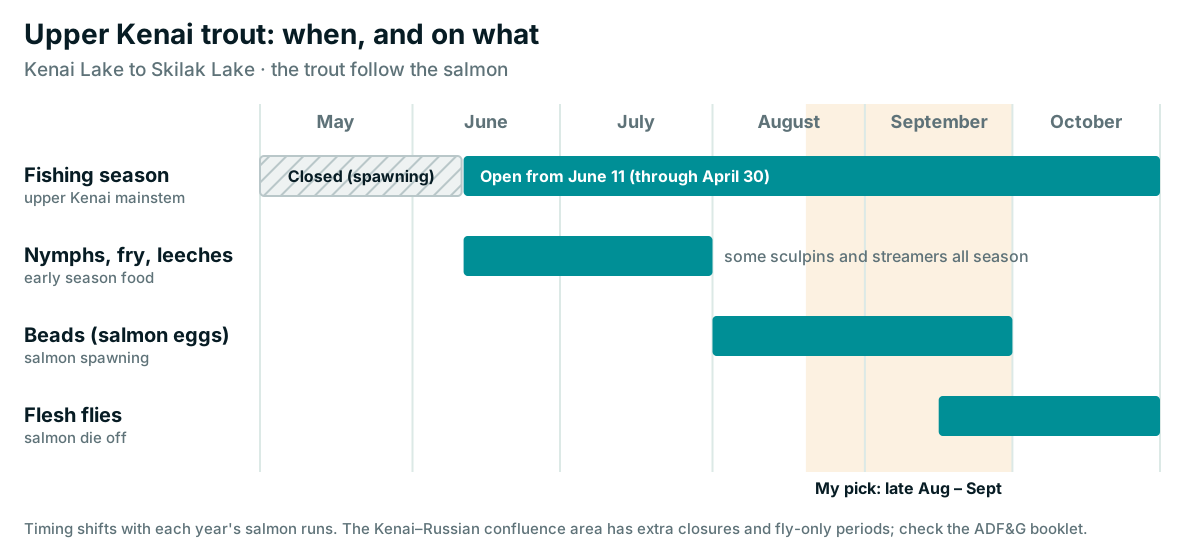
Late August and September would be my first choices, especially September. The salmon spawning cycle gives the trout eggs and, later, flesh to feed on, and they put on weight fast. I still enjoy the earlier fishing after the June 11 opener, but fall is when I'd plan a dedicated trout trip.
ADF&G's research backs this up: Kenai rainbows winter mainly in Kenai and Skilak lakes, spawn in spring, and high numbers move into the river in summer and fall once salmon carcasses become available as food.
Wading or drift boat?
I do both. For a short outing, I like fishing from the bank and carefully wading accessible water. For a full day, I prefer a drift boat, because it lets me cover more ground and reach places that are difficult to fish from shore.
Bead fishing: the main method in late summer
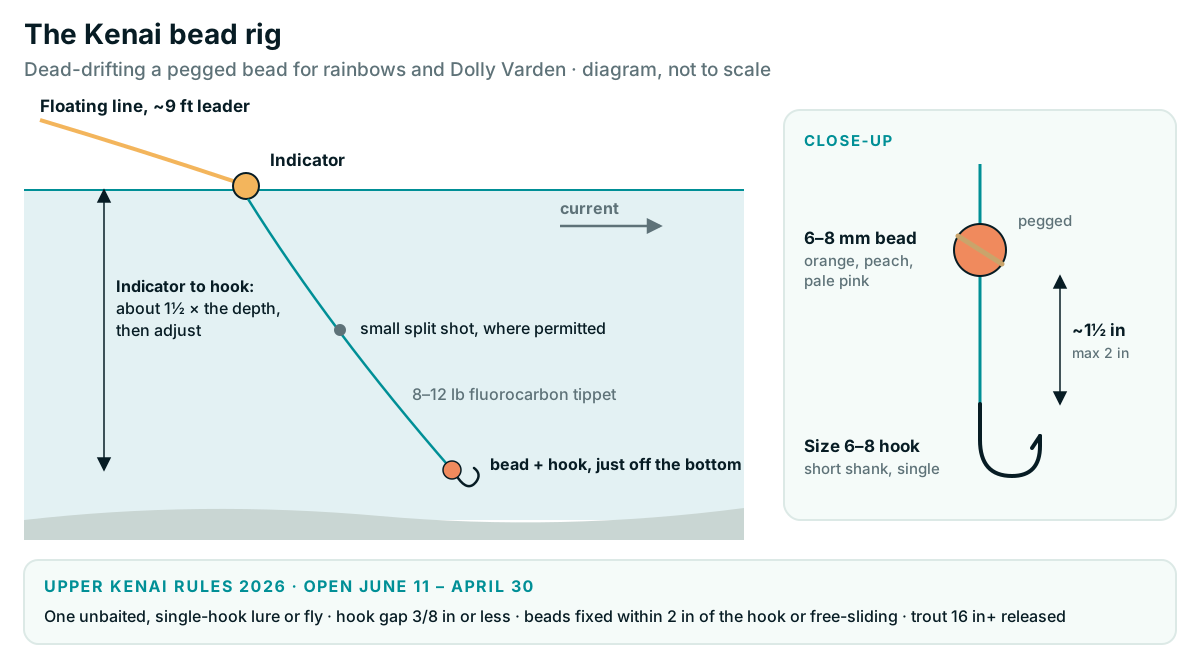
When the salmon spawn, loose eggs tumble down the river, and the trout line up behind the spawning fish to eat them. A plastic bead imitates a single egg. My setup:
- Bead size: I usually start with a 6 or 8 mm bead and carry some 10 mm ones.
- Colours: mainly orange, peach and pale pink, plus a few washed-out shades. Eggs fade in the water, so the duller colours often matter later in the run.
- Pegging: I peg the bead about 1½ inches above a short-shank size 6 or 8 hook. The rules say a fixed bead must be within 2 inches of the hook, and the hook gap must be 3/8 inch or less.
- Presentation: a natural dead drift near the bottom, the way a real egg moves.
The single most common mistake I see is changing bead colours constantly before fixing the drift. If the bead isn't drifting naturally at the right depth, the colour hardly matters. Get the depth and drift right first, then experiment with colour.
Flesh flies in the fall
I start trying flesh flies when salmon carcasses and pieces of flesh become noticeable in the river. I like simple rabbit-strip patterns in cream, dirty white, pale peach and light pink. I carry both small, sparse flies and slightly fuller patterns, then let the fish tell me which they want.
Other flies worth carrying
- Early in the season: small nymphs, salmon fry patterns and leeches.
- All season: sculpin patterns and olive or black streamers.
- Dry flies when I see fish feeding on top.
- Mice, as an occasional experiment.
Whatever you tie on, it has to meet the rules for the stretch you're fishing: unbaited, single hook, with a 3/8-inch gap or less, and flies only where and when the water is fly-only.
Leader, tippet and indicator
I fish a 5- or 6-weight fly rod with a click-and-pawl or light disc-drag reel and a weight-forward floating line that can turn over an indicator and split shot. Then:
- Leader: about nine feet, finishing with roughly 8–12 lb fluorocarbon. Kenai fish are strong, and heavier tippet lets you land them quickly.
- Indicator depth: I start with the indicator about 1½ times the water depth above the hook, then adjust for current and drift. The current pulls the line at an angle, so you need more than the straight depth to reach the bottom.
- Weight: small split shot where permitted, just enough to get down without constantly snagging.
What a bite looks like
Trout eating a drifting egg rarely yank the indicator under. More often the indicator pauses, twitches, moves sideways or dips just slightly. Treat anything that doesn't look like the natural drift as a bite and lift the rod tip firmly. If it was the bottom, you've learned your depth; if it was a fish, you've just hooked a Kenai rainbow. Once you know where the bottom is, shorten the distance a little so the bead ticks along just above it.
Reading the water
I look for:
- Current seams, where fast and slow water meet
- The softer edges of faster water
- Gravel-bar drop-offs
- Feeding lanes downstream of spawning salmon, where eggs drift to waiting trout
In short, I want places where trout can collect food without fighting the strongest current. And I'm careful not to walk over spawning beds or disturb the salmon. The trout fishing depends on them.
Landing and releasing big trout
Every rainbow and Dolly 16 inches or longer has to go back on the upper Kenai, and those are the fish you'll remember, so good handling matters:
- Use a large rubber-mesh net.
- Keep the fish in the water while you remove the hook.
- Wet your hands before touching it, and support it horizontally.
- For photos, have the camera ready first and go for an in-water shot.
- Use tackle strong enough to land the fish promptly rather than playing it to exhaustion.
A Dolly Varden I won't forget
The biggest Dolly Varden I've seen caught was about 24 inches, near Sportsman's Landing. A friend hooked it on an 8 mm peach-coloured bead during a September trip. What I remember most is how it stayed deep at first, then made a strong run just as we thought it was ready for the net. Its bright orange spots and fall colours were beautiful. It went back into the river, of course.
Rainbows and Dolly Varden
Rainbows are usually my main focus, but I'm always happy to catch Dollies, especially in their fall colours. They often feed in the same places on the same eggs, so on a good day you catch whichever takes the drift. Both species have the same limit on the upper Kenai: one a day under 16 inches.
Bears on the upper Kenai
Late summer and fall, when the trout fishing is best, is also when bears are feeding on the same salmon. My habits:
- Carry bear spray where you can reach it immediately.
- Watch the banks, and make noise when walking through thick cover.
- Keep food and other attractants properly secured.
- If a bear approaches, stop fishing and give it space.
- If you have a fish on, be ready to cut the line and leave rather than bring the fish toward the bear.
Crowds and etiquette
Fall trout fishing feels more spread out than peak sockeye season, but popular places still get busy. I give people room and ask before stepping into water someone is fishing. With drift boats, I keep my casts clear, communicate early and leave room for them to pass. A friendly conversation usually solves things.
Is a guided drift trip worth it?
For a first visit, I think so. A good guide helps with presentation, choosing water and understanding the river, which can take years to learn alone. I'd budget roughly $235–275 per person for a shared half-day trip or $330–375 for a full day. Confirm what's included (equipment, waders, transport) and what's extra. The fishing license and the tip are usually separate.
Mistakes I see on the Kenai
- Changing bead colours constantly instead of fixing the drift.
- Fishing too shallow. The bead needs to be near the bottom.
- Using too much weight, which snags and kills the natural drift.
- Overlooking the soft water close to the bank. Fish often hold right at your feet.
- Casting too far. Long casts aren't always necessary. I'd rather make a short, controlled drift and adjust the depth carefully.
Wading safety
The Kenai is cold and the current is strong, so I take wading seriously:
- Wear a snug wading belt and use a wading staff.
- Favour shallow water with a clear route back.
- Use rubber-soled boots, with studs where appropriate. Felt soles are illegal in Alaska's fresh waters.
- Wear flotation when wading.
- If you'll be fishing from a drift boat, ask the guide whether studded boots are OK on the boat before you step in.
- Never chase a hooked fish into deeper current.
Your first day on the upper Kenai: a simple plan
- Check the rules: the season dates, the confluence closures and any emergency orders for that week.
- Buy your license online from ADF&G before you go.
- Pack a 5–6 weight rod, 8–12 lb fluorocarbon, indicators, small split shot, a box of 6–10 mm beads in orange, peach and pale pink, size 6–8 hooks, a few flesh flies and streamers, a rubber-mesh net, bear spray and a wading belt.
- Start on a seam or a gravel-bar drop-off below spawning salmon, without walking on the spawning beds.
- Set the indicator at about 1½ times the depth and make short, controlled drifts.
- Adjust depth before colour. If you aren't occasionally ticking bottom, go deeper.
- Release big fish in the water, and keep at most one trout under 16 inches if you want one for dinner.
Questions people ask about Kenai River trout fishing
When is the best time to fish the Kenai River for trout?
Late August through September, when the trout feed on salmon eggs and then salmon flesh. The upper Kenai opens June 11, and early-season fishing with nymphs, fry patterns and leeches can be good too.
Is the Kenai River catch and release for rainbow trout?
Mostly. On the upper Kenai you may keep one rainbow a day, and it must be under 16 inches; every rainbow 16 inches or longer must be released. The same applies to Dolly Varden.
Is the upper Kenai River open in May?
No. The upper Kenai, from the Kenai Lake outlet to Skilak Lake, is closed to all sport fishing from May 1 to June 10 to protect spawning rainbows. It reopens June 11.
What size bead for Kenai River trout?
6 or 8 mm is a good start, with a few 10 mm beads in the box. Orange, peach and pale pink cover most situations. Peg the bead within 2 inches of the hook; I use about 1½ inches.
Can you use bait on the upper Kenai?
No. Only one unbaited, single-hook artificial lure or fly is allowed year-round, with a hook gap of 3/8 inch or less.
What fly rod is best for Kenai rainbows?
A 5- or 6-weight with a weight-forward floating line works well for beads and nymphs under an indicator. Use 8–12 lb fluorocarbon tippet so you can land big fish quickly.
Are felt-soled waders allowed in Alaska?
No. Felt and other fibrous soles have been banned for sport fishing in Alaska's fresh waters since 2012, to stop the spread of invasive organisms. Use rubber soles, with studs if needed.
Fishing the Kenai in summer too? See DIY Alaska fishing on a budget for the Russian River and the road system, and the 5 types of salmon in Alaska for run timing. In winter, try ice fishing around Anchorage.